
Written by
pmindsetin
United Kingdom November 26, 2026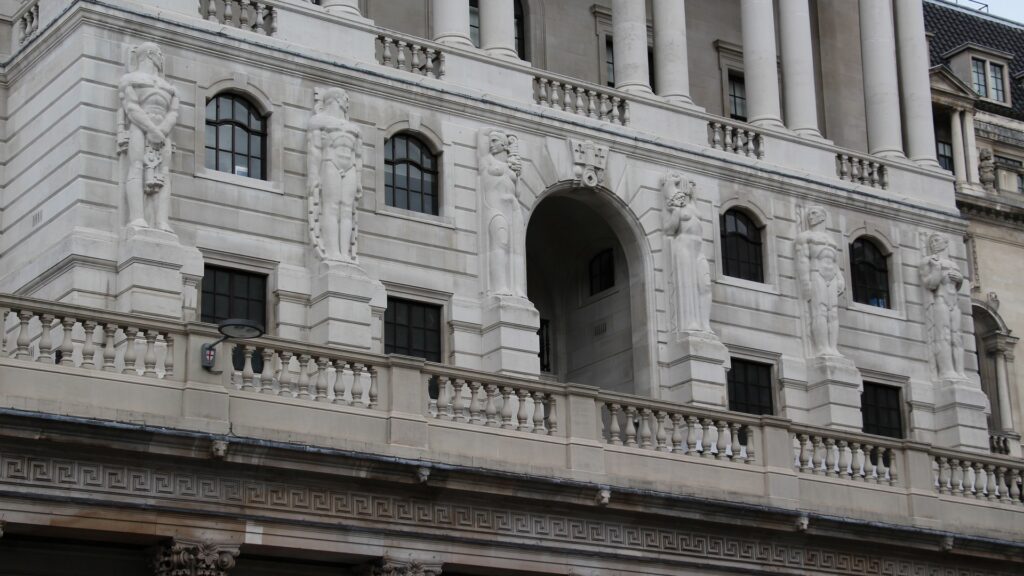
Photo credit
MR. P MINDSET
The Bank of England set out the final part of a review of bank capital on Thursday, proposing lower minimum requirements for some domestic lending. The central bank estimates that changes proposed across the full review would reduce the binding Tier 1 capital requirements of major UK banks in normal times by the equivalent of about half a percentage point of risk-weighted assets.
The Prudential Regulation Authority will consult on the domestic lending proposals. The Bank said those changes alone would bring the aggregate risk-based Tier 1 requirements that count toward its benchmark from 13.1% to 12.8%. Including certain firm-specific buffers and requirements on overseas exposures would put the overall measure at 13.2%. The Financial Policy Committee's system-wide benchmark remains around 13%; it is not a new minimum applied to every lender.
The committee kept the UK countercyclical capital buffer at 2%. That buffer is separate from the proposals to lower other requirements and can be released in a downturn. Under the domestic lending proposals, the comparable risk-weighted requirement for domestically focused systemically important banks would fall from 13.6% to 13.0%, the Bank said. The effect would vary by lender.
The central bank said the package could give banks more capacity to lend to households and businesses. It warned that going materially further would make banks less able to absorb losses and support the economy in a downturn. Its stability report said lenders remained well capitalised and liquid, while flagging higher global borrowing costs and growing links between the financing of artificial intelligence and the wider financial system.
The announcement concerns banks' loss-absorbing capital. It does not change the Bank Rate, and the proposed domestic changes are not yet in force.
Photo: The Bank of England on Threadneedle Street in London, in an archival photograph. Fred Romero / Wikimedia Commons | https://commons.wikimedia.org/wiki/File:London_-_Bank_of_England.jpg | CC BY 2.0 https://creativecommons.org/licenses/by/2.0/ | Cropped and resized.
Sources:
https://www.bankofengland.co.uk/financial-stability-report/2026/november-2026/
https://www.bankofengland.co.uk/financial-stability-in-focus/2026/fsif-outcomes-of-the-fpcs-review-of-the-bank-capital-framework
Sources
- https://www.bankofengland.co.uk/financial-stability-report/2026/november-2026/
- https://www.bankofengland.co.uk/financial-stability-in-focus/2026/fsif-outcomes-of-the-fpcs-review-of-the-bank-capital-framework
