
Written by
MR. P MINDSET Editorial Teamin
Crypto November 17, 2026
Photo credit
November 17, 2026 · MR. P MINDSET
Ether's recent volatility has brought renewed attention to how investors obtain and protect digital-asset exposure. The Wall Street Journal reported that ether traded near multimonth lows during the week of November 16; MarketWatch also reported a decline below $2,000 on November 13. Both are historical observations, not current quotes or predictions.
Ether is the native asset of the Ethereum network. The network supports applications and transactions, while ether is used in network operations, including fees. Owning ether does not grant a conventional ownership stake in a corporation, and a token's market price does not provide the same information as a company's earnings report.
Direct holding or a fund?
Buying through an exchange and holding tokens directly can give a user choices about withdrawal and custody, subject to the platform's terms. Self-custody gives control over private keys but makes secure storage and recovery the holder's responsibility. Losing a recovery phrase or sending assets to the wrong address can cause irreversible loss. An exchange or custodian adds counterparty and operational risks.
A brokerage-traded product may be easier to hold in a traditional account, but investors should read its prospectus. Fees, trading hours, custody arrangements and whether a product actually holds an asset or uses derivatives can differ. A market price can deviate from the value of underlying holdings. Brokerage account protection is not a promise against market losses, and crypto itself is generally not an FDIC-insured deposit.
Look at the whole portfolio
A 20% drop in an asset held as 5% of a portfolio would reduce the total portfolio by roughly 1% if everything else stayed unchanged. That is a simplified hypothetical example before fees or taxes; other holdings can move at the same time. Concentrated positions and borrowing can make the impact larger.
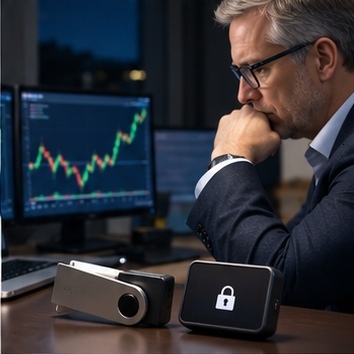
Avoid confusing a security device with a guarantee. Verify software and addresses, enable appropriate account protections and never disclose recovery phrases to someone claiming to be support. A fund, exchange or wallet can fail; no setup eliminates every risk. Decide what exposure you can afford to lose and review the product documents before acting.
Sources
Wall Street Journal, crypto market report
MarketWatch, November 13 report
For education only; not personalized financial, investment, tax, legal or medical advice.


