
-


Original Lilly logos at its Indianapolis headquarters. Archival photo, February 2011. Photo/mark: Paul Sableman · Source · CC BY 2.0. Resized for display; mark unaltered. Reporting checked November 17, 2026. Event/source date: 2026-11-14.
Key takeaways
- Lilly reported up to 23.3% average weight loss at 48 weeks in the studied population.
- EloraTZP combines investigational eloralintide with tirzepatide.
- Phase 2 findings are a development milestone, rather than an approval.
Eli Lilly reported new results from its obesity and diabetes portfolio on November 14 as ObesityWeek opened in Washington. One focus was EloraTZP, an investigational combination of eloralintide and tirzepatide. The conference ran through November 17, placing the data within a busy period of competing research announcements.
What Lilly reported
In the phase 2 study, adults with obesity or overweight and type 2 diabetes experienced weight loss of up to an average of 23.3% at 48 weeks, the company said. Lilly also reported improvements in A1C, a measure used to assess blood-glucose control over time. Reuters independently reported the principal figures, while noting that the company had not yet released the full results at the time of its report.
Why the study population matters
Results in people with type 2 diabetes should not be casually ranked against results from trials enrolling different populations. The treatment duration, comparison group, dose and statistical method can all affect the reported percentage. “Up to” also describes a reported result under particular study conditions, rather than an outcome every patient should expect.
Phase 2 research helps determine whether a treatment should progress through development. It does not establish that a combination is approved, suitable for a particular person or commercially available. Detailed safety data, later-stage evidence and regulatory review remain important parts of the development process.
The company-news perspective
For investors, a new combination represents potential pipeline opportunity alongside development expense and uncertainty. The practical follow-up is to examine the complete study, the planned next stage and eventual regulatory decisions. For patients, trial headlines should lead to a discussion with a qualified clinician, rather than a decision to obtain an investigational product.
Explore the financial glossary for market terminology, or ask Mr. P AI about a learning concept.
Sources and reporting dates
Lilly — ObesityWeek data announcement
Reuters via WSAU — independent reporting
Company statements are attributed to the company. Forecasts and investigational uses are identified in the reporting. Logos identify the relevant organizations or tokens and do not imply endorsement. Archival headquarters photos are not photographs of the reported clinical or market event.
MR. P MINDSET provides educational information, not personalized investment, financial, medical, tax or legal advice. Trading and investing can cause substantial loss. Discuss medical treatment with a qualified clinician; compare actual loan terms with an appropriately qualified lender.
November 17, 2026 -


Bagsværd headquarters and original company sign. June 2016. Photo/mark: News Øresund – Johan Wessman · Source · CC BY 3.0. Resized for display; mark unaltered. Reporting checked November 17, 2026. Event/source date: 2026-11-16.
Key takeaways
- STEP Young randomized 167 children aged six to under twelve.
- The treatment-regimen analysis showed BMI down 13.5%, versus a 2.7% increase with placebo at week 68.
- The research concerns an investigational use in this age group, not a new approval.
Novo Nordisk released full phase 3 STEP Young results on November 16, alongside publication in The New England Journal of Medicine. The trial studied semaglutide with lifestyle support in 167 children aged six to under twelve with obesity. The company described the use in this younger population as investigational.
Two estimates answer different questions
At week 68, the treatment-regimen analysis showed average BMI falling 13.5% with semaglutide, compared with a 2.7% rise with placebo. That approach accounts for outcomes regardless of treatment adherence. A separate efficacy analysis, estimating what would happen with treatment adherence and no other weight-management interventions, showed a 17.4% reduction versus a 2.2% increase. The percentages should not be mixed or presented as interchangeable results.
Benefits and tolerability belong together
Both groups received lifestyle support. Gastrointestinal symptoms were more common with semaglutide, and the trial’s safety results deserve attention alongside changes in BMI. A result in a defined study population cannot predict the outcome for every child, and it does not answer every question about treatment over a lifetime.
Becker’s Hospital Review independently reported the treatment-regimen figures and the trial’s size. For readers following Novo as a business, the publication adds evidence to a potential expansion of its obesity-treatment research. An approved product in one population does not automatically have approval in another; regulatory decisions and clinical decisions remain distinct.
Reading the next headline
Check the participants’ ages, the follow-up period, the comparison group and the statistical approach before comparing this study with another weight-loss report. BMI is also a different measure from percentage body-weight change. This is reporting on clinical research, rather than advice to start or change a child’s medication.
Explore the financial glossary for market terminology, or ask Mr. P AI about a learning concept.
Sources and reporting dates
Novo Nordisk — full STEP Young results
Becker’s Hospital Review — independent reporting
Company statements are attributed to the company. Forecasts and investigational uses are identified in the reporting. Logos identify the relevant organizations or tokens and do not imply endorsement. Archival headquarters photos are not photographs of the reported clinical or market event.
MR. P MINDSET provides educational information, not personalized investment, financial, medical, tax or legal advice. Trading and investing can cause substantial loss. Discuss medical treatment with a qualified clinician; compare actual loan terms with an appropriately qualified lender.
November 17, 2026 -


Roche’s Basel headquarters. November 2015. Logo shown separately for identification. Photo/mark: Fred Romero from Paris, France · Source · CC BY 2.0. Resized for display; mark unaltered. 
Roche original logo. Company/token identification; no endorsement implied. Photo/mark: Roche · Source · Public domain. Resized for display; mark unaltered. Reporting checked November 17, 2026. Event/source date: 2026-11-16.
Key takeaways
- FDA approval covers ER-positive, HER2-negative, ESR1-mutated advanced breast cancer under specified conditions.
- Giredestrant, branded Wilserdly, is used with everolimus.
- An advanced-cancer approval is separate from a decision on early-stage treatment.
Roche has received US approval for Wilserdly, the brand name for giredestrant, in combination with everolimus for certain adults with advanced breast cancer. The November 16 FDA decision creates a new treatment option within a precisely defined indication. It does not apply to everyone diagnosed with breast cancer.
Who the approval covers
The indication is for estrogen receptor-positive, HER2-negative, ESR1-mutated locally advanced or metastatic disease, with the mutation identified by an FDA-authorized test. It includes specified circumstances in which disease returns during or after endocrine-based adjuvant therapy, or progresses after endocrine-based treatment in the metastatic setting. The exact label and a clinician’s assessment determine eligibility.
What the evidence measures
Roche said the combination improved progression-free survival in the ESR1-mutated population studied in its phase 3 evERA trial. Progression-free survival measures time before disease worsens or death occurs under the study definition. It should not be described as a guaranteed cure or treated as the same measure as overall survival. The FDA notice and prescribing information provide the appropriate starting points for assessing the evidence and risks.
Reuters separately reported the approval and the importance of the ESR1 mutation and prior hormone treatment. For a company-news reader, this is a regulatory milestone. Commercial results will also depend on prescribing, access, coverage and competition; approval by itself does not establish eventual sales.
A separate decision remains separate
Roche is also pursuing giredestrant in earlier-stage disease. That application must be assessed on its own evidence and regulatory timetable. This report concerns the advanced-cancer combination approved on November 16. Patients should discuss treatment choices and the complete safety information with their oncology team.
Explore the financial glossary for market terminology, or ask Mr. P AI about a learning concept.
Sources and reporting dates
Roche — November 16 announcement
Reuters via MarketScreener — independent reporting
Company statements are attributed to the company. Forecasts and investigational uses are identified in the reporting. Logos identify the relevant organizations or tokens and do not imply endorsement. Archival headquarters photos are not photographs of the reported clinical or market event.
MR. P MINDSET provides educational information, not personalized investment, financial, medical, tax or legal advice. Trading and investing can cause substantial loss. Discuss medical treatment with a qualified clinician; compare actual loan terms with an appropriately qualified lender.
November 17, 2026 -


Solana original logo. Company/token identification; no endorsement implied. Photo/mark: The Solana Foundation · Source · CC0. Resized for display; mark unaltered. Reporting checked November 17, 2026. Event/source date: 2026-11-16.
Key takeaways
- The Solana Foundation announced the mainnet designation on November 16.
- Solana 1.0 is a protocol version, separate from validator software versions.
- The announcement does not require users to swap tokens or move accounts.
Solana has retired the “mainnet beta” designation it used since launch and adopted Solana 1.0 as a shared version for its protocol. The Solana Foundation announced the change on November 16, coordinating the rollout with the Anza and Firedancer teams. CoinDesk separately reported the move the same day.
The same network for existing users
The Foundation says SOL, accounts, applications, assets and transaction history remain unchanged. The change is not a migration to a replacement cryptocurrency. A reader encountering a message claiming that this naming update requires a token swap should check the official announcement before taking action.
Why version numbers matter
A protocol defines the rules participants agree to follow. Validator clients are software implementations that help operate a network. Solana’s shared protocol version is intended to make network changes easier to track without treating the software version of one client as the version of the entire system. That distinction becomes more useful when different client teams maintain their own release schedules.
The Foundation describes the new label as recognition of technical progress, while noting that Solana has already operated as a production network. Dropping “beta” does not mean that software development has finished or that future changes become automatic. Operators still need to review the requirements of individual releases and network upgrades.
What the announcement leaves open
A versioning milestone alone cannot establish investment returns, future adoption or uninterrupted operation. The useful follow-up is to look at documented changes, implementation status and network performance over time. For users, the immediate takeaway is practical: the accounts and assets they already use remain part of the same network.
Explore the financial glossary for market terminology, or ask Mr. P AI about a learning concept.
Sources and reporting dates
Solana Foundation — protocol announcement
CoinDesk — independent reporting
Company statements are attributed to the company. Forecasts and investigational uses are identified in the reporting. Logos identify the relevant organizations or tokens and do not imply endorsement. Archival headquarters photos are not photographs of the reported clinical or market event.
MR. P MINDSET provides educational information, not personalized investment, financial, medical, tax or legal advice. Trading and investing can cause substantial loss. Discuss medical treatment with a qualified clinician; compare actual loan terms with an appropriately qualified lender.
November 17, 2026 -

Ethereum original logo. Company/token identification; no endorsement implied. Photo/mark: Blockchain · Source · Public domain. Resized for display; mark unaltered. Reporting checked November 17, 2026. Event/source date: 2026-11-16.
Key takeaways
- Bitmine reported 6,077,745 ETH as of November 15 at 3 p.m. Eastern.
- The weekly addition was 7,653 ETH, according to its November 16 announcement.
- A company’s treasury strategy does not establish the direction of ether’s price.
Bitmine Immersion Technologies continued adding ether during a difficult period for cryptocurrency markets. In a November 16 announcement, the company reported 6,077,745 ETH as of November 15 at 3 p.m. Eastern. The weekly addition of 7,653 ETH took its balance to approximately 6.08 million tokens, figures also reported by Crypto.news.
A large holding, with a dated valuation
Bitmine estimated that its ether represented 4.97% of the total supply figure used in its release. The announcement valued ETH at $1,823 per token for its holdings calculation. That is a reference price at a particular reporting point, rather than an offer to buy or sell ether now. Changes in market price can materially change the dollar value of the same token balance.
Ethereum and ether describe different things
Ethereum is the blockchain network on which applications and transactions operate; ether, commonly shown as ETH, is its native asset. A company accumulating ETH is taking exposure to that asset. The purchase itself does not measure the number of applications being built, prove a rise in network use, or eliminate the possibility of further losses.
For readers comparing the company’s shares with the cryptocurrency, there is another layer to consider. A corporate treasury also has operating costs, financing decisions and obligations. Its share price can reflect those factors as well as the underlying asset. Owning a company with crypto holdings is therefore a different exposure from holding tokens directly.
The next useful comparison
Future disclosures can establish whether purchases continue and how the company finances them. Token balances, cash resources and any share issuance should be read together. The current announcement documents one company’s strategy; it should not be treated as evidence that a market bottom has been reached.
Explore the financial glossary for market terminology, or ask Mr. P AI about a learning concept.
Sources and reporting dates
Bitmine — November 16 holdings announcement
Crypto.news — independent reporting
Company statements are attributed to the company. Forecasts and investigational uses are identified in the reporting. Logos identify the relevant organizations or tokens and do not imply endorsement. Archival headquarters photos are not photographs of the reported clinical or market event.
MR. P MINDSET provides educational information, not personalized investment, financial, medical, tax or legal advice. Trading and investing can cause substantial loss. Discuss medical treatment with a qualified clinician; compare actual loan terms with an appropriately qualified lender.
November 17, 2026 -

Bitcoin original logo. Company/token identification; no endorsement implied. Photo/mark: Wikideas1 · Source · CC0. Resized for display; mark unaltered. Reporting checked November 17, 2026. Event/source date: 2026-11-17.
Key takeaways
- US spot bitcoin ETFs recorded $7.9 million in net inflows on November 16.
- BlackRock’s IBIT attracted $76.5 million; withdrawals elsewhere offset most of that.
- Fund flows measure subscriptions and redemptions, rather than every bitcoin trade.
US spot bitcoin exchange-traded funds returned to a small net inflow on Monday, November 16, ending seven consecutive sessions of withdrawals. Farside Investors’ daily table put the combined inflow at $7.9 million, a figure independently reported by CoinDesk on November 17. The result offers a change in direction for one session, with a much more uneven picture underneath.
One fund carried much of the improvement
BlackRock’s iShares Bitcoin Trust, IBIT, attracted $76.5 million. Grayscale’s GBTC recorded $34.6 million in outflows, while other withdrawals absorbed much of the remaining gain. The difference between IBIT’s figure and the industry total matters: a strong day for the largest product is not automatically a strong day for the entire category.
What an ETF flow can tell you
An ETF lets an investor buy shares through a brokerage account instead of handling a cryptocurrency wallet directly. Net flow describes money entering through creations compared with money leaving through redemptions. It is different from trading volume, which counts shares changing hands. Neither measure captures every transaction across bitcoin exchanges and wallets.
The editorial implication is limited but useful. A positive net total can indicate renewed demand for these particular funds. It does not identify every buyer, explain every investor’s motive, or establish that the recent selling pressure has ended. ETF shares also carry expenses and can fall with the value of their underlying holdings.
What to watch next
The next several daily reports will show whether demand broadens across issuers and persists over time. Comparing the fund-level figures with the combined total gives a more complete picture than looking at a single large inflow. These are dated fund-flow observations, not live bitcoin prices or a prediction of the next market move.
Explore the financial glossary for market terminology, or ask Mr. P AI about a learning concept.
Sources and reporting dates
Farside Investors — daily Bitcoin ETF flows
CoinDesk — November 17 market report
Company statements are attributed to the company. Forecasts and investigational uses are identified in the reporting. Logos identify the relevant organizations or tokens and do not imply endorsement. Archival headquarters photos are not photographs of the reported clinical or market event.
MR. P MINDSET provides educational information, not personalized investment, financial, medical, tax or legal advice. Trading and investing can cause substantial loss. Discuss medical treatment with a qualified clinician; compare actual loan terms with an appropriately qualified lender.
November 17, 2026 -


MR. P MINDSET · Not a documentary photograph. When every dollar has several possible uses, deciding what to do first can feel overwhelming. You may want to build savings, pay down a credit card and invest for the future at the same time. The best answer depends on your income, interest rates, access to cash and the risks you face—not a single rule from a social-media post.
The Federal Reserve explains that its policy rate influences other short-term interest rates and household borrowing decisions. The Associated Press reported in November that inflation pressures could keep borrowing costs elevated. A bank’s savings rate or your credit-card rate will not necessarily move in step with the Fed, and each account has its own terms. Start by checking the actual numbers on your statements.
Protect the essentials first
Before making an extra debt payment or investing, identify the money needed for housing, utilities, food, necessary transportation, insurance and minimum payments. If you are already struggling to cover those bills, contact lenders and service providers promptly. The Consumer Financial Protection Bureau advises people who cannot pay a credit-card bill to contact the card issuer; you do not have to be behind before asking for help.
Ask about hardship arrangements, payment dates, fees and how any plan may affect your credit. Get the details in writing. Be cautious of companies that charge fees for debt relief, promise that debts will disappear or urge you to stop communicating with creditors. Consider a reputable nonprofit credit counselor if you need help comparing options.
Build a starter emergency buffer
A separate savings account can help keep a surprise repair from immediately becoming more credit-card debt. There is no universally correct starter amount. For one household it might be $200; for another, a month of essential expenses. Choose a first milestone that fits your circumstances, then build toward a larger reserve as income allows.
The CFPB emphasizes that even a small dedicated emergency fund can help manage financial shocks. Keep this money accessible and separate from everyday spending if that helps you avoid using it. Automatic transfers on payday can make saving consistent, but start small enough that the transfer does not trigger overdraft fees or leave a bill unpaid.
Compare the cost of debt with the return on savings
List every balance, minimum payment and annual percentage rate, or APR. Make at least the required minimum payment on each debt whenever possible. Then consider directing extra money toward the highest-interest balance first; this approach generally minimizes interest costs if rates and payments stay consistent. Another approach pays the smallest balance first to build momentum. The best plan is one you can maintain.
For a rough illustration, a $1,000 card balance at 24% APR costs about $20 in interest for one month if the balance and rate stayed constant; actual interest depends on daily balances, compounding, payments and issuer terms. By comparison, $1,000 in a savings account earning a hypothetical 4% annual percentage yield would earn about $40 over a year if the rate and balance stayed unchanged, before any tax. Rates can change. These examples are not personalized recommendations or quoted market rates.
Because expensive debt can grow quickly, paying it down often makes sense after establishing a modest cash cushion. But directing every dollar to debt while keeping no emergency cash can force you to borrow again after a setback. A split—some money to savings, some to extra payments—may be more sustainable. Your job stability, dependents and access to credit all matter.
Know where your cash is held
Compare savings accounts by annual percentage yield, fees, minimum balance and withdrawal access, not just an advertised headline rate. At an FDIC-insured bank, the standard insurance limit is $250,000 per depositor, per insured bank, per ownership category, subject to FDIC rules. Accounts in the same category at the same bank may be combined for that calculation. Confirm that the institution and product qualify; stocks, bond funds and money market mutual funds are not FDIC-insured deposits.
A certificate of deposit may offer a fixed rate for a term, but withdrawing early can trigger a penalty. A Treasury bill or money market fund has different liquidity, market and insurance characteristics. For emergency money, understand when and how you can access the funds before reaching for a higher advertised yield.
Keep long-term goals in view
If your employer offers a retirement-plan match, understand the eligibility rules and consider whether capturing the match fits alongside essential bills, high-cost debt and your emergency buffer. Money invested in stocks or funds can lose value, especially over short periods, so cash needed soon generally should not depend on a market rebound. Diversification can reduce concentration risk but cannot guarantee a profit or prevent losses.
Choose one action today
Write down your highest debt APR, your savings APY and your next emergency-fund milestone. Set minimum payments on a calendar, then decide on a manageable amount for savings and extra debt payments. Review the plan in a month and whenever rates or your finances change. This is general education; a qualified financial or tax professional can help with decisions specific to your circumstances.
Sources and reporting dates
Federal Reserve, policy rates and the economy
Associated Press, inflation and borrowing costs
CFPB, credit card payment difficulties
Supplied MR. P MINDSET article dated November 17, 2026. Primary-source economic figures and consumer guidance checked November 17, 2026. Images are AI-generated illustrations, not documentary photographs. Examples are hypothetical, not current local prices or financial product offers.
Educational information only; not individualized financial, investment, tax or legal advice. Examples are hypothetical and outcomes vary.
November 17, 2026 -
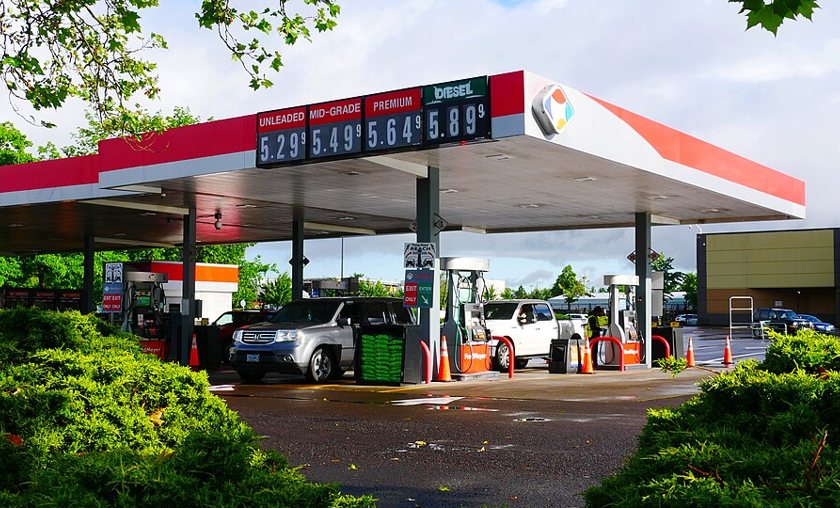

MR. P MINDSET · Not a documentary photograph. Gas prices can change quickly, and the amount displayed on a roadside sign can affect much more than a weekend drive. Commuters, parents, delivery workers and small business owners all have to decide how much money to set aside for transportation while fuel costs remain uncertain.
In its November 2026 outlook, the U.S. Energy Information Administration projected that average U.S. retail gasoline prices would decline in 2027, while raising its forecast from the previous month. That is a forecast, not a promise, and national averages cannot tell you what your local station will charge. MarketWatch separately reported that national prices had recently fallen after a period of higher costs. Together, the reports point to the same lesson: plan for movement in either direction rather than betting your budget on one headline.
Find your actual fuel number
Start with the last four to eight weeks of fuel purchases. Add the amounts and divide by the number of weeks to estimate a weekly average. If your schedule changes with the season, include that in your estimate. Driving children to activities, commuting to a new workplace or visiting family for the holidays may change your mileage more than a modest change in the price per gallon.
As an illustration, a driver buying 40 gallons a month at a hypothetical $4 per gallon spends $160. If the price rises by 25 cents and usage stays the same, the monthly cost becomes $170. If the price falls by 25 cents, it becomes $150. These are examples, not current local price quotes. Your numbers will depend on where and how much you drive.
Make a fuel cushion before you need it
Put a realistic gas allowance in your budget and add a small buffer if possible. For a household averaging $160 a month, setting aside $175 creates $15 of room for a price increase or an extra trip. If the money is not used, carry it forward for maintenance or another transportation expense. When income is irregular, set aside fuel money on each payday rather than waiting until the tank is empty.
If you cannot afford that cushion, look first for changes that cost little or nothing. Combining errands, coordinating pickups or working from home when your employer permits can reduce miles. Public transit or carpooling may work for some trips; compare fares, parking, travel time and safety rather than assuming an option is free.
Shop for fuel without wasting it
Compare prices on your usual route using posted prices or a reputable app, but check when the information was updated. A station ten miles away may not be a bargain once you count the drive. For example, saving 20 cents a gallon on a 12-gallon fill saves $2.40 before accounting for extra fuel, time or membership fees.
Read the conditions on loyalty programs. Some discounts require a purchase, membership, particular payment method or use of personal data. A credit-card reward is useful only if the card’s fees and interest do not exceed the reward. Paying a balance in full and on time avoids the interest expense that can erase a small fuel discount.
Drive and maintain the car thoughtfully
Avoid rapid acceleration and hard braking when traffic and safety allow. The Department of Energy notes that aggressive driving can reduce fuel economy; actual effects depend on the vehicle and driving conditions. Remove unnecessary weight, avoid extended idling when practical and keep up with maintenance recommended by the manufacturer.
Check tire pressure when the tires are cold and follow the recommendation on the vehicle’s door placard or in its manual. Do not inflate above the recommended pressure in pursuit of better mileage. Safe tires and brakes matter more than a small fuel saving. Also compare the total cost before buying an additive or device marketed as a miracle fuel saver.
Look beyond the pump
A lower gasoline bill is only one part of transportation affordability. Insurance, repairs, parking, registration and loan payments may be larger expenses. If you are considering replacing a car, compare the purchase price, financing, insurance and expected maintenance with the realistic fuel savings. An expensive new vehicle does not automatically save money because it gets better mileage.
For drivers who depend on a car to earn income, keep a simple log of work-related mileage and expenses. Tax treatment varies, and records alone do not guarantee a deduction. A qualified tax professional can help assess your situation. Set aside money for wear and tear as well as fuel, particularly if you drive for deliveries or rideshare work.
A plan for your next fill-up
Check your usual local price, combine one trip, review tire pressure safely and record the amount you spend. At month’s end, compare the total with your fuel budget and adjust it. A forecast can help frame possibilities, but a flexible plan is what helps protect your wallet when the pump price changes.
Sources and reporting dates
EIA, November short-term energy outlook
MarketWatch, recent gasoline-price report
U.S. Department of Energy, energy saver guide
Supplied MR. P MINDSET article dated November 17, 2026. Primary-source economic figures and consumer guidance checked November 17, 2026. Images are AI-generated illustrations, not documentary photographs. Examples are hypothetical, not current local prices or financial product offers.
Educational information only; not individualized financial, investment, tax or legal advice. Examples are hypothetical and outcomes vary.
November 17, 2026 -


MR. P MINDSET · Not a documentary photograph. A lower inflation rate does not mean your grocery receipt will return to what it was a few years ago. It means prices are rising more slowly than before. For households already feeling squeezed, the distinction matters: the goal is to build a spending plan around today’s actual bills, not wait for yesterday’s prices to return.
The U.S. consumer price index rose 0.4% from September to October 2026, after seasonal adjustment, according to the Bureau of Labor Statistics. The Associated Press independently reported the same monthly increase and noted that inflation pressures extend beyond gasoline. The national index is an average, not your personal inflation rate. Rent, food, transportation and insurance can move differently in your household.
Start with the money that reaches your account
Write down your take-home income for a normal month. If your income varies, start with a conservative month rather than your best month. Next, list housing, utilities, transportation, groceries, insurance, minimum debt payments and medications. Subtract those necessities from take-home pay. What remains must cover everything else, including unexpected costs and savings.
This first pass is not about judging yourself. It tells you whether the problem is discretionary spending, bills that have grown, or income that cannot cover necessities. If essentials exceed income, a spending tracker alone will not fix the gap. Contact service providers and lenders early, look for assistance programs in your area and consider a nonprofit credit counselor.
Find your household’s biggest pressure points
Review the past two or three months of bank and card statements. Sort purchases into a few categories you understand rather than dozens you will abandon next week. Compare the dollar amounts, not just the number of transactions. A small change to a large recurring bill may matter more than canceling an occasional treat.
For groceries, compare unit prices: a larger package is not always cheaper per ounce, and a sale is not a saving if food goes unused. Plan a few meals using ingredients you already have, take a list and choose store brands where quality works for your family. If a nearby store is cheaper, include the cost of the extra trip before switching.
Look at recurring costs with fresh eyes
Check your phone plan, streaming subscriptions, internet bill and insurance coverage. Ask providers about available discounts or lower-cost plans, but compare the terms carefully. A lower premium with a much higher deductible may leave you worse off after a claim. Never remove essential coverage just to make this month’s bill look smaller.
For a simple illustration, reducing three recurring bills by $10 each frees $30 a month, or $360 over a year if the savings continue. Those figures are an example, not a guaranteed result. Put any verified savings toward a specific goal instead of letting them disappear into unplanned spending.
Give irregular bills their own place
Car repairs, school expenses and annual subscriptions may feel like emergencies, but many are predictable even if the amount is uncertain. Add the estimated annual cost of each item and divide by 12. Move that amount into a separate savings category each month if your budget allows. A $600 annual insurance bill, for example, calls for $50 per month.
A separate emergency fund serves a different purpose: a job loss or an urgent medical expense you could not reasonably plan. Even a modest reserve can reduce the need to borrow. Start with an amount you can repeat, and keep it accessible. The Consumer Financial Protection Bureau suggests building a dedicated fund and replenishing it after use.
Make the plan realistic enough to keep
Choose one day each week for a ten-minute check-in. Look at upcoming bills, the remaining grocery budget and any automatic payments. If you overspend in one category, adjust another rather than pretending the difference will disappear. Build a small amount of flexible spending into the plan when possible; a budget that leaves no room for life can be difficult to maintain.
If you share expenses, agree on who pays which bills and what happens when a surprise arrives. If money is particularly tight, prioritize housing, utilities, food, transportation needed for work, and necessary medical care. Contact creditors before missing a payment to ask about hardship options. Terms and consequences differ, so get any agreement in writing.
Your action plan this week
Pick three actions: calculate take-home income and essential expenses; compare the unit price of five staples you buy often; and review one recurring bill. Then schedule a small automatic transfer to savings if the essentials are covered. Revisit the plan when your income, family needs or prices change. A useful budget is not a test of discipline; it is a tool for making informed choices with the money you have.
Sources and reporting dates
Bureau of Labor Statistics, October CPI release
Associated Press, October inflation report
CFPB, building an emergency fund
Supplied MR. P MINDSET article dated November 17, 2026. Primary-source economic figures and consumer guidance checked November 17, 2026. Images are AI-generated illustrations, not documentary photographs. Examples are hypothetical, not current local prices or financial product offers.
Educational information only; not individualized financial, investment, tax or legal advice. Examples are hypothetical and outcomes vary.
November 17, 2026 -
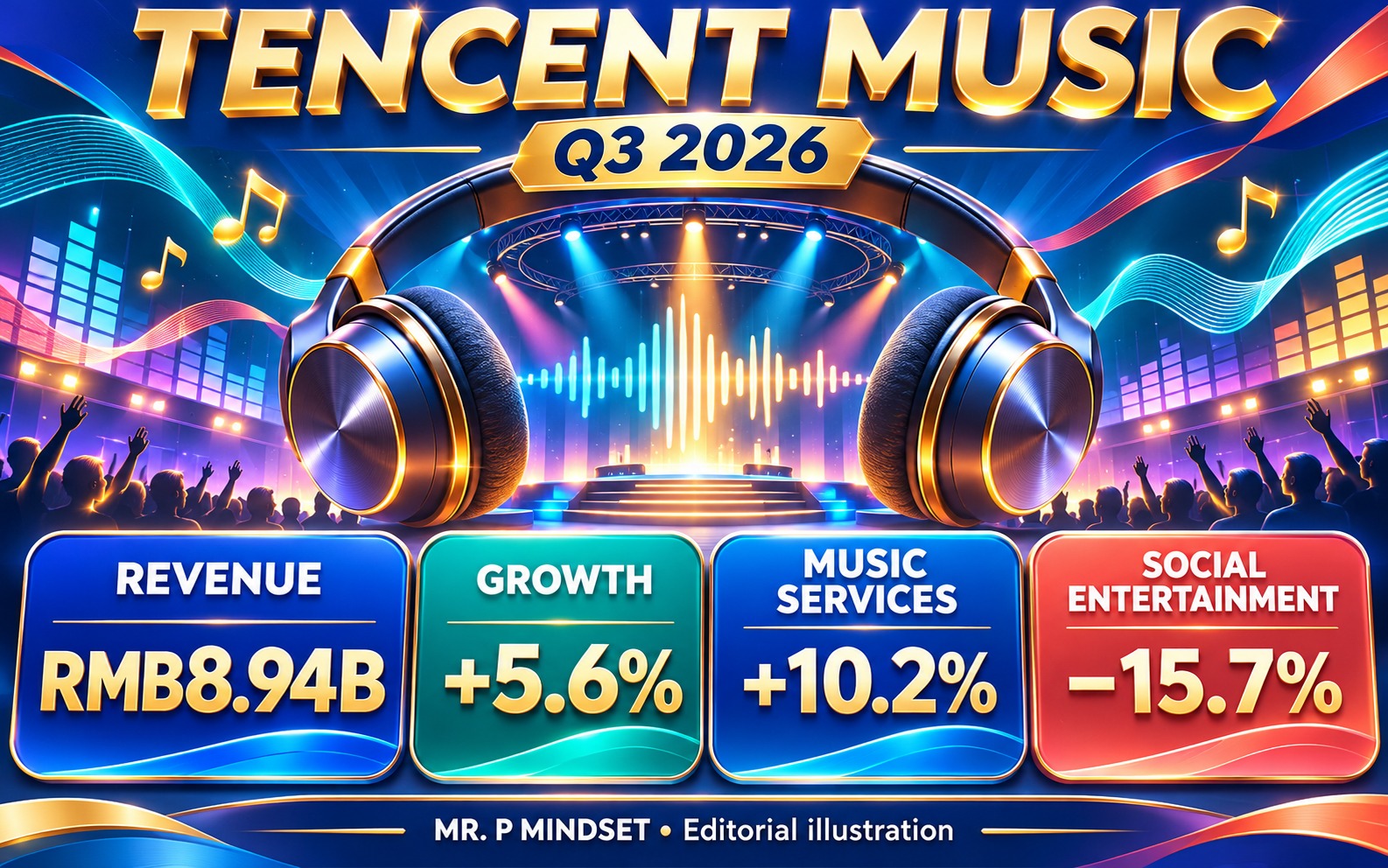
AI-generated editorial illustration of music streaming earnings. Figures follow the cited company release; no actual event or product is depicted. Data: company release. Tencent Music’s revenue rose 5.6% to RMB8.94 billion. Music-related services expanded while social entertainment revenue fell.
Key takeaways
- Third-quarter revenue increased 5.6% to RMB8.94 billion.
- Music-related services revenue grew 10.2%; social entertainment and other revenue declined 15.7%.
- The company reported unaudited results for the quarter ended September 30, 2026.
Growth with an uneven mix
Tencent Music Entertainment reported its third-quarter 2026 results on November 17. Total revenue rose 5.6% from a year earlier to RMB8.94 billion. The Chinese music and audio company’s headline growth concealed different directions within its business.
Music expands, social entertainment shrinks
Revenue from music-related services rose 10.2% to RMB7.68 billion. Social entertainment services and other revenue fell 15.7% to RMB1.26 billion. These segment growth rates describe different revenue pools, so they should not be added together to calculate total company growth.
Reported and adjusted profit differ
Net profit attributable to equity holders was RMB2.15 billion under IFRS and was broadly unchanged from a year earlier. Non-IFRS net profit attributable to equity holders was RMB2.45 billion. The adjusted measure removes items included in the reported result; its definition and reconciliation remain important.
Keep currency and timing visible
The company’s core reporting currency is renminbi, and these figures describe the quarter ended September 30. Its release labels the results unaudited. The numbers are not live market data, and this article does not infer a current share-price move from the earnings announcement.
Explore financial definitions in the market glossary and compare reporting dates in the Earnings & IPO Calendar.
Sources and reporting dates
Tencent Music official Q3 2026 release — published November 17, 2026; checked November 17, 2026.
Investing.com independent earnings coverage — published November 17, 2026; checked November 17, 2026.
Original reporting prepared with AI assistance from the cited sources. The graphic is an AI-generated editorial illustration, not a photograph of an actual event or company product. No live quotation or human editorial review is claimed.
Educational disclaimer. This article provides information and education, not personalized investment, financial, trading, legal or tax advice. It does not recommend buying, selling or holding a security. Investing involves risk, including loss of capital.
November 17, 2026


