
-
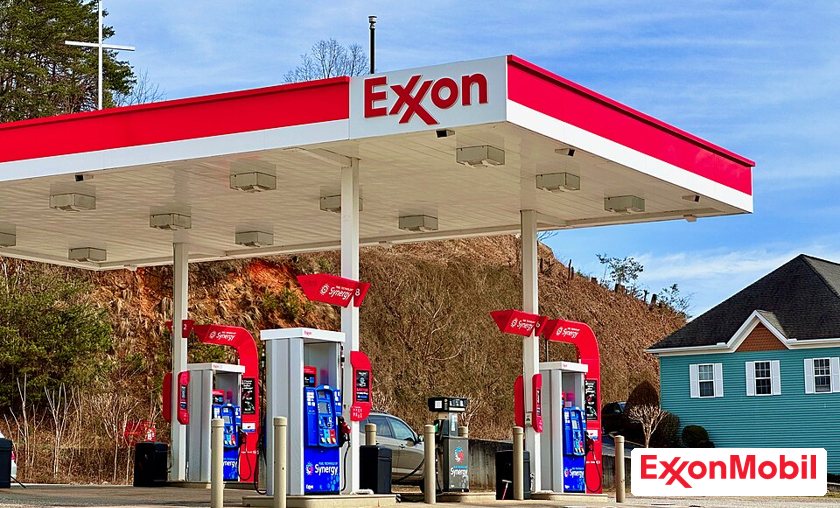

Conceptual company-building illustration identifying ExxonMobil; not a photograph of its headquarters. November 17, 2026 · MR. P MINDSET
ExxonMobil reported third-quarter 2026 earnings of $15.4 billion, or $3.72 per share, on October 30. The result illustrates why an energy company cannot be understood solely through the price of crude oil. It produces oil and gas, but it also turns crude into fuel and operates chemical businesses.
Reuters and the Associated Press reported that stronger refining margins and production contributed to strong results across major oil companies. A refining margin broadly describes the difference between the value of refined products and the cost of crude inputs, before all the costs and risks of running a refinery. It is not identical to company profit.
The integrated model matters
A higher oil price may help the production business while making crude inputs more expensive for a refinery. At other times fuel-product prices rise faster than crude, improving the value of refining operations. Different segments can move in different directions. An investor who reads only the headline earnings number can miss that balance.
ExxonMobil also declared a fourth-quarter dividend of $1.07 per share, payable December 10 to holders of record at the close of November 16, according to the company. A declared payment is different from a permanent promise: future dividends depend on board decisions and the company's financial position. Anyone buying after a relevant record or ex-dividend date should verify eligibility with their broker.
What to watch next
Compare reported earnings with cash flow, capital spending and debt. Look at production volumes alongside realized prices, since higher revenue can come from either or both. Examine planned investment and shareholder distributions over several quarters rather than extrapolating from one strong period. Company forecasts are management expectations, not completed results.
Oil and gas prices, refining margins, operating disruptions and government policy can change quickly. A strong earnings report does not establish that a stock is cheap or predict its next move. For readers learning about energy stocks, ExxonMobil offers a useful example of a diversified operating model—and of why each segment deserves its own analysis.
Sources
For education only; not personalized financial, investment, tax, legal or medical advice.
November 17, 2026 -


Illustration of a shopper planning holiday spending. Not a documentary photograph. November 17, 2026 · MR. P MINDSET
Holiday shopping can create a financial problem long after the decorations come down. The Associated Press reported on November 17 that retail spending growth slowed in October as high prices and uncertainty weighed on shoppers. A Bank of America Institute analysis also examined changes in seasonal spending. Neither tells you what your household can afford; your own cash flow does.
Choose the total before choosing gifts
List every expected seasonal cost: presents, food, travel, shipping, clothing, tips and donations. Set an overall amount after rent, utilities, food and minimum debt payments are covered. Divide that amount across categories and name the funding source. A budget of $500 is not really $500 if shipping and travel add another $200.
If you have eight paydays before an event and can set aside $25 each time, you will accumulate $200. That is a hypothetical example, not a guarantee or a suggestion to neglect urgent bills. If the amount is smaller than your list, adjust the list before using credit. Agreeing on a gift exchange or price limit with family can reduce pressure on everyone.
Compare the actual deal
Check the price history or compare several retailers. A percentage-off banner is less useful than the final price including shipping, taxes and return costs. Avoid buying an item only because a countdown clock says the offer ends soon. Read the return window, especially for gifts bought far in advance.
Be careful with buy-now-pay-later offers. Splitting a purchase into installments does not make it free: missed-payment fees, overlapping due dates or financing charges can strain a later budget. Review the terms and record every payment date. With credit cards, paying the statement balance in full by the due date generally avoids interest on new purchases when the card's grace-period conditions are met; consult your issuer.
Make room for flexibility
Set aside a small contingency for a late invitation or postage. Use one list to track each purchase against the cap, and stop when the available money is gone. If your income is unpredictable, make a smaller initial commitment and add spending only after essential bills are covered.
A low-cost gathering, shared meal or thoughtful note can be meaningful without an expensive purchase. The goal is not to eliminate celebration; it is to decide beforehand how much of next month's income you are willing to commit. Before buying today, ask whether the purchase still fits the whole plan.
Sources
Associated Press, October retail spending
Bank of America Institute, November consumer checkpoint
For education only; not personalized financial, investment, tax, legal or medical advice.
November 17, 2026 -


Illustration of a family reviewing health coverage. Not a documentary photograph. November 17, 2026 · MR. P MINDSET
A lower monthly premium can be attractive when cash is tight. But a health plan's total cost depends on what happens when you need care. As families review coverage for the coming year, comparing the premium, deductible, copayments, prescriptions and provider network can prevent an unpleasant surprise.
AARP recommends comparing the full annual cost and the coverage for your regular medicines and care. This does not mean one plan is best for everyone. A person who rarely uses care and a family with ongoing treatment may reasonably choose different coverage.
Estimate two scenarios
First, add twelve months of premiums. Then estimate routine visits and prescriptions using the plan's terms. Second, consider a year with a larger medical event. A deductible is generally the amount you pay for covered services before the plan begins paying its share, subject to plan rules. Coinsurance is a percentage of the covered cost; a copayment is a fixed amount for a service. The out-of-pocket maximum caps certain covered in-network costs under the plan's rules, but typically does not include premiums or every possible charge.
For an illustrative comparison, Plan A costs $200 monthly and Plan B costs $280 monthly. Plan A saves $960 in annual premiums, but if its deductible and cost sharing are substantially higher, it may cost more in a year with significant covered care. These amounts are hypothetical; check the actual summary of benefits before deciding.
Check the details before enrolling
Confirm that your physicians, hospital and medicines are covered by the specific plan and network. Ask about prior authorization, referral rules and whether a prescription has a preferred alternative. Review coverage for dependents and any employer contribution. A provider listed online may change networks, so verify with both the insurer and the provider.
If a health savings account or flexible spending account is available, review eligibility, contribution rules and deadlines with your plan administrator. Do not assume every unspent balance can be carried forward. Tax rules and your own circumstances matter.
Make a decision you can afford to use
Compare realistic annual spending, not just the first bill. Keep a copy of the plan documents and write down questions before calling the insurer. If income or life circumstances change, ask whether you qualify for a special enrollment period. Open-enrollment dates and coverage options depend on the employer, state and type of plan. A licensed benefits counselor can help you evaluate choices without guessing.
Sources
AARP, fall money moves and health plan costs
HealthCare.gov, total yearly costs
For education only; not personalized financial, investment, tax, legal or medical advice.
November 17, 2026 -


Illustration of a household reviewing a utility bill. Not a documentary photograph. November 17, 2026 · MR. P MINDSET
Heating bills arrive when household budgets are already busy. The Guardian reported on November 11 that a group representing state energy-assistance directors projected higher average U.S. heating costs this winter. A national projection is not a personal bill: the fuel you use, weather, utility rates and your home's condition all matter. The Energy Information Administration's November outlook also shows how forecasts can change, revising its outlook for natural-gas prices after a mild start to the month.
Start with a baseline
Find last winter's bills and note both the amount paid and the quantity of energy used. A larger bill can reflect higher usage, a higher rate, a longer billing period or all three. Ask your utility how its budget-billing program works: it may smooth payments, but you still owe for actual usage and may face a reconciliation later.
Next, estimate what you can set aside each payday. If last winter's heating bills totaled $900 over three months, setting aside $300 a month would cover that example before any changes. Your number will differ. If the estimate is impossible, call the utility before a payment is missed to ask about a payment plan, shutoff protections and assistance.
Make low-cost changes safely
Check for drafts around doors and windows. Weatherstripping and curtains can help in appropriate situations. Follow your heating system manufacturer's maintenance instructions, replace filters when recommended and keep vents clear. Never block required ventilation or use an oven, charcoal grill or outdoor heater to heat living space. Renters should ask the landlord before making changes to the property.
If you use a thermostat schedule, choose temperatures that are safe for the people and pets in your household. A smart thermostat can be useful, but installation and compatibility costs matter. A discount is not a saving if a product does not solve a problem you have.
Where to find help
Ask your utility about income-based programs and contact your state or local energy-assistance agency. The federally funded Low Income Home Energy Assistance Program is administered locally; eligibility, funding and application dates vary. Keep copies of bills and any agreement. A payment arrangement can have consequences if missed, so ask what happens before signing.
A practical next step is to review one bill, identify your fuel type and contact the utility about available assistance. Treat forecasts as planning tools rather than promises. Revisit your estimate when rates or temperatures change, and protect essential safety needs before seeking small savings.
Sources
The Guardian, winter heating outlook
U.S. Department of Energy, energy savings
For education only; not personalized financial, investment, tax, legal or medical advice.
November 17, 2026 -


Toll Brothers original logo. Company/token identification; no endorsement implied. Photo/mark: Kalel2007 · Source · Public domain. Resized for display; mark unaltered. Reporting checked November 17, 2026. Event/source date: 2026-11-16.
Key takeaways
- Toll Brothers announced the Egret Collection opening on November 16.
- The company advertised homes from $1.3 million on 90-foot-wide sites.
- Advertised starting prices and availability can change; the release did not establish completed sales.
Toll Brothers announced the opening of its Egret Collection at Monterey at Lakewood Ranch in Florida on November 16. The builder said the new single-family homes would be offered on 90-foot-wide home sites, with advertised prices starting at $1.3 million. The announcement adds a new choice within the company’s luxury-housing portfolio.
What the builder is adding
The company described one- and two-story designs with substantial living space and access to community amenities. Buyers should check current availability, the specific home site and the included features directly. A starting price does not necessarily include every option, upgrade or site premium, and it is not a fixed price for every home in a collection.
An opening is one stage in the sales process
This is a company-reported community launch. The release does not by itself establish how many buyers will sign contracts, how many contracts will close or what margin the builder will earn. For a public homebuilder, orders, cancellations, deliveries and incentives answer different questions. A newly available home is not the same measure as a completed transaction.
The announcement comes against a difficult national backdrop. Associated Press reported that existing-home sales slowed sharply in October as mortgage costs strained affordability. That report measures previously occupied homes across the country; it should not be used as a direct sales reading for this new luxury collection in Florida. Local conditions and buyer groups can differ.
What follows the opening
Future company results can show how communities contribute to orders and deliveries. For a prospective buyer, the useful next step is to compare the full purchase cost, financing terms and the details of the property itself. This article reports the development and its stated starting price, rather than endorsing a builder, predicting appreciation or presenting a mortgage offer.
Explore the financial glossary for market terminology, or ask Mr. P AI about a learning concept.
Sources and reporting dates
Toll Brothers — company announcement
GlobeNewswire — dated release and full details
Associated Press — wider housing-market context
Company statements are attributed to the company. Forecasts and investigational uses are identified in the reporting. Logos identify the relevant organizations or tokens and do not imply endorsement. Archival headquarters photos are not photographs of the reported clinical or market event.
MR. P MINDSET provides educational information, not personalized investment, financial, medical, tax or legal advice. Trading and investing can cause substantial loss. Discuss medical treatment with a qualified clinician; compare actual loan terms with an appropriately qualified lender.
November 17, 2026 -


Fannie Mae original logo. Company/token identification; no endorsement implied. Photo/mark: Unknown authorUnknown author · Source · Public domain. Resized for display; mark unaltered. Reporting checked November 17, 2026. Event/source date: 2026-11-16.
Key takeaways
- Fannie Mae’s November forecast uses a 7.2% mortgage-rate projection through 2027.
- Its forecast table is dated November 12; independent reporting followed November 16.
- Forecast values are estimates and should remain separate from recorded results.
Fannie Mae has reduced its mortgage-rate projection while maintaining a restrained view of the housing market. Its November housing forecast, dated November 12, projects an average 30-year fixed mortgage rate of 7.2% through 2027. Scotsman Guide reported the revision on November 16, comparing it with the previous 7.5% projection for next year.
A lower forecast can still mean expensive borrowing
The revision does not imply a return to the much lower rates many existing homeowners already hold. Elevated borrowing costs can limit what new buyers can afford and discourage owners from moving if a new mortgage would cost considerably more. These pressures help explain why a somewhat better rate outlook can coexist with a cautious view of housing activity.
Read the shaded columns carefully
Fannie Mae’s table distinguishes historical observations from forecast periods. It also notes that the interest-rate projections use information as of October 30, while other forecasts use the later date shown in the report. A forecast published in November is therefore not the same thing as a market quote collected today. The assumptions and information cutoff matter.
The company’s economists also revised parts of their mortgage-origination outlook. Originations describe newly made loans, including purchase mortgages and refinancings. They are a different measure from home prices, housing starts or completed home sales. Putting these indicators together gives a more useful picture than treating one projected rate as a complete housing forecast.
What could change
Inflation, employment, bond yields and borrowing demand can move differently from the assumptions used in the projection. The editorial takeaway is to compare future releases with this dated baseline and keep actual results separate from estimates. The report is a scenario for understanding the market, not a guaranteed mortgage rate or a recommendation to buy a home at a particular time.
Explore the financial glossary for market terminology, or ask Mr. P AI about a learning concept.
Sources and reporting dates
Fannie Mae — November housing forecast
Scotsman Guide — independent reporting
Company statements are attributed to the company. Forecasts and investigational uses are identified in the reporting. Logos identify the relevant organizations or tokens and do not imply endorsement. Archival headquarters photos are not photographs of the reported clinical or market event.
MR. P MINDSET provides educational information, not personalized investment, financial, medical, tax or legal advice. Trading and investing can cause substantial loss. Discuss medical treatment with a qualified clinician; compare actual loan terms with an appropriately qualified lender.
November 17, 2026 -


Freddie Mac original logo. Company/token identification; no endorsement implied. Photo/mark: Freddie Mac · Source · Public domain. Resized for display; mark unaltered. Reporting checked November 17, 2026. Event/source date: 2026-11-12.
Key takeaways
- The 30-year fixed average fell to 7.11% in the November 12 survey.
- The prior weekly average was 7.18%; a year earlier it was 6.24%.
- A survey interest rate is different from an individual borrower’s APR.
Freddie Mac’s latest available weekly mortgage survey showed another decline in borrowing costs, offering a modest improvement for home shoppers. The 30-year fixed-rate mortgage averaged 7.11% as of November 12, down from 7.18% a week earlier. The figure was still higher than the 6.24% average reported a year earlier.
A weekly trend, with a defined scope
The move marked a fourth consecutive weekly decline. Freddie Mac also put the 15-year fixed average at 6.45%, down from 6.57%. Associated Press independently reported the change. These are the November 12 survey results, rather than a live rate update for November 17 or an offer from a particular lender.
Why your quote can differ
The survey focuses on conventional, conforming home-purchase loans for well-qualified borrowers with a 20% down payment. A different down payment, credit profile, property, loan size or loan type can produce a different rate. Fees and points also affect total borrowing cost. The annual percentage rate, or APR, is a broader cost measure and should not be confused with the interest rate alone.
A fall in the weekly average can improve the backdrop without making a purchase affordable for every household. The home’s price, taxes, insurance, maintenance and required cash at closing still matter. A national average also cannot describe every local housing market or the terms available on a particular day.
The next report
Freddie Mac’s next weekly release will provide a new dated comparison. Until then, this survey is useful for understanding the recent direction of rates. Borrowers comparing actual financing should compare the same loan assumptions and written estimates, rather than treating the headline average as a rate they are entitled to receive.
Explore the financial glossary for market terminology, or ask Mr. P AI about a learning concept.
Sources and reporting dates
Freddie Mac — weekly survey release
Associated Press — independent reporting
Company statements are attributed to the company. Forecasts and investigational uses are identified in the reporting. Logos identify the relevant organizations or tokens and do not imply endorsement. Archival headquarters photos are not photographs of the reported clinical or market event.
MR. P MINDSET provides educational information, not personalized investment, financial, medical, tax or legal advice. Trading and investing can cause substantial loss. Discuss medical treatment with a qualified clinician; compare actual loan terms with an appropriately qualified lender.
November 17, 2026 -


Anthropic original logo. Company/token identification; no endorsement implied. Photo/mark: Anthropic · Source · Public domain. Resized for display; mark unaltered. Reporting checked November 17, 2026. Event/source date: 2026-11-12.
Key takeaways
- Claude Meetings initially supports Google Meet in beta.
- The assistant can answer questions and help create documents and whiteboards during a call.
- Availability and connected-tool permissions depend on the organization and plan.
Anthropic is extending Claude from a chat window into workplace meetings. Its November 12 product article describes Claude Meetings as a beta that can join Google Meet as a visible participant, follow a discussion and start work while people are still talking. The offering is rolling out on Team and Enterprise plans.
From notes to work in progress
Teams can ask Claude questions out loud or through meeting chat. The assistant can help draft a plan, build a document or create a whiteboard during the discussion. Anthropic says notes, action items and the work created during a call are available from the meeting’s page afterward. Reuters reported the broader office-work push in its November 10 coverage of the initial announcement.
Permissions remain part of the product
The company says Claude uses connected tools with the relevant person’s permission. It appears in the meeting and posts a notice when it joins. Anthropic also describes controls for calls involving outside guests and differences between Team and Enterprise administration. Organizations should review the applicable settings and make sure participants understand transcription before enabling it.
A meeting assistant can create a useful first draft, but a draft still requires review. Misheard discussion, missing context or an incorrect assumption can affect an action item or proposed plan. A team needs a clear process for deciding who checks the output and who is authorized to share it.
Why the rollout matters
The business opportunity is broader than a better meeting summary: Anthropic wants AI to participate in the work that follows a conversation. Whether that saves time depends on accuracy, integration and adoption within each team. Beta availability is also distinct from a feature being enabled for every customer; the organization’s plan and configuration still determine access.
Explore the financial glossary for market terminology, or ask Mr. P AI about a learning concept.
Sources and reporting dates
Anthropic — Claude Meetings product announcement
Reuters — independent announcement coverage
Company statements are attributed to the company. Forecasts and investigational uses are identified in the reporting. Logos identify the relevant organizations or tokens and do not imply endorsement. Archival headquarters photos are not photographs of the reported clinical or market event.
MR. P MINDSET provides educational information, not personalized investment, financial, medical, tax or legal advice. Trading and investing can cause substantial loss. Discuss medical treatment with a qualified clinician; compare actual loan terms with an appropriately qualified lender.
November 17, 2026 -


Google original logo. Company/token identification; no endorsement implied. Photo/mark: Google LLC · Source · Public domain. Resized for display; mark unaltered. Reporting checked November 17, 2026. Event/source date: 2026-11-12.
Key takeaways
- Google introduced Gemini 4 Hydrogen on November 12 and updated its announcement November 13.
- Search changes include more visual responses, tables and broader linking.
- Free-app access and API pricing are separate arrangements.
Google is expanding Gemini 4 Hydrogen across Search, the Gemini app and developer services after introducing the model on November 12. Its model announcement, updated November 13, positions Hydrogen around fast everyday coding and tasks that involve AI using tools. The Search rollout places the same technology in a product used by a much wider audience.
What changes in Search
Google says the upgrade improves handling of multi-part questions and the selection of relevant links. It also describes more visual and structured responses, including images and comparison tables. These are the company’s stated capabilities, not a guarantee that every response will be correct. Readers still need to open and assess the underlying sources when an answer matters.
Access is not one universal plan
The company says Hydrogen is available through several products, including its API and AI Studio. In the Gemini app, free users can receive access through automatic model selection when appropriate for a prompt. That does not mean API usage is automatically unlimited or free. Consumer subscriptions, API charges and workplace access are separate product arrangements.
Independent coverage from T3 described the model’s intended improvements in everyday assistance and Search. The main practical question is how well it follows a user’s request while completing the task efficiently. Company benchmark claims help frame that question, but checking a real workflow remains necessary.
The business angle
For Google, distributing a model through Search, consumer software and developer tools links research with products that can reach different customers. A rollout still needs to translate into useful, repeatable work. This report describes the newly announced offering; it does not claim that a model cannot make mistakes or that product availability is identical in every account.
Explore the financial glossary for market terminology, or ask Mr. P AI about a learning concept.
Sources and reporting dates
T3 — independent product coverage
Company statements are attributed to the company. Forecasts and investigational uses are identified in the reporting. Logos identify the relevant organizations or tokens and do not imply endorsement. Archival headquarters photos are not photographs of the reported clinical or market event.
MR. P MINDSET provides educational information, not personalized investment, financial, medical, tax or legal advice. Trading and investing can cause substantial loss. Discuss medical treatment with a qualified clinician; compare actual loan terms with an appropriately qualified lender.
November 17, 2026 -

Microsoft original logo. Company/token identification; no endorsement implied. Photo/mark: Microsoft Corporation — Jason Wells · Source · Public domain. Resized for display; mark unaltered. Reporting checked November 17, 2026. Event/source date: 2026-11-17.
Key takeaways
- Microsoft announced new MAI capabilities at Ignite on November 17.
- The lineup spans coding, cybersecurity, image creation, voice and decision tasks.
- Benchmark and price-performance comparisons are Microsoft’s reported claims.
Microsoft used its November 17 Ignite announcements to expand the range of AI tools it offers for business work. The new MAI lineup addresses coding, cybersecurity, image creation, real-time voice, transcription and decision tasks. The company is emphasizing operating cost as well as capability, a practical issue when software calls an AI model repeatedly.
What is being offered
Microsoft highlighted MAI Code 2 for everyday enterprise software work and MAI Cyber 2 Flash for security tasks. Image and speech models address different workflows, while Decision 1.1 is intended for routing and related decisions. The products have different purposes; a model designed for a quick classification is not necessarily the right choice for a lengthy engineering problem.
Read comparisons as claims, then test
Microsoft published benchmark and price-performance comparisons against other models. Those are company-reported evaluations, rather than a promise that every business will see the same result. The useful comparison includes task accuracy, latency, the amount of human correction required and the full cost of running a workflow. A lower price for one unit of usage does not establish a lower cost for a completed job.
Independent launch coverage from Axios also identified Microsoft’s expansion in specialized AI models. The wider business question is whether customers can turn the growing catalogue into dependable work. Access, integration and appropriate controls matter alongside model quality.
Why it matters beyond a product launch
For Microsoft, a broader in-house lineup adds another part to its AI and cloud business. For buyers, the announcement creates more choices to evaluate. Adoption and eventual revenue will need to be measured in later disclosures; the launch itself does not establish the financial return or prove that one model should replace every alternative.
Explore the financial glossary for market terminology, or ask Mr. P AI about a learning concept.
Sources and reporting dates
Microsoft AI — Ignite model announcements
Axios — independent launch coverage
Company statements are attributed to the company. Forecasts and investigational uses are identified in the reporting. Logos identify the relevant organizations or tokens and do not imply endorsement. Archival headquarters photos are not photographs of the reported clinical or market event.
MR. P MINDSET provides educational information, not personalized investment, financial, medical, tax or legal advice. Trading and investing can cause substantial loss. Discuss medical treatment with a qualified clinician; compare actual loan terms with an appropriately qualified lender.
November 17, 2026


