
-
Mr. P Mindset Editorial Team
Hong Kong’s Hang Seng TECH Index will expand from 30 to 50 stocks in December, giving companies that make batteries, optical equipment and robots a place alongside the internet and electronics groups already in the benchmark. Hang Seng Indexes Company announced the lineup Friday, adding 20 Hong Kong-listed stocks without removing any existing members.
The additions include battery maker Contemporary Amperex Technology, better known as CATL; electronics supplier Luxshare Precision; optical components supplier Zhongji InnoLight; chip designer Shanghai Biren; and UBTECH Robotics. The changes will be implemented after Hong Kong’s market closes on Friday, December 4, and take effect Monday, December 7. The broader Hang Seng Index, a separate benchmark, will keep its 95 members unchanged.
The expansion puts a new selection method into practice. Forty places go to companies selected by market value, while 10 go to eligible companies outside that group based on year-over-year sales growth. Turnover and other eligibility requirements apply, and buffer rules can keep an existing member in the index even when its ranking falls.
The change also matters to investors who hold funds that track the index. China Asset Management (Hong Kong) said in a filing that its Hang Seng TECH ETF tracks the benchmark and that it will make updated fund documents available on December 7. The index provider’s illustrative rebalance, based on November 18 data, put CATL at 2.17%, the largest weight among the new members. That figure is a simulation, not a confirmed December weight.
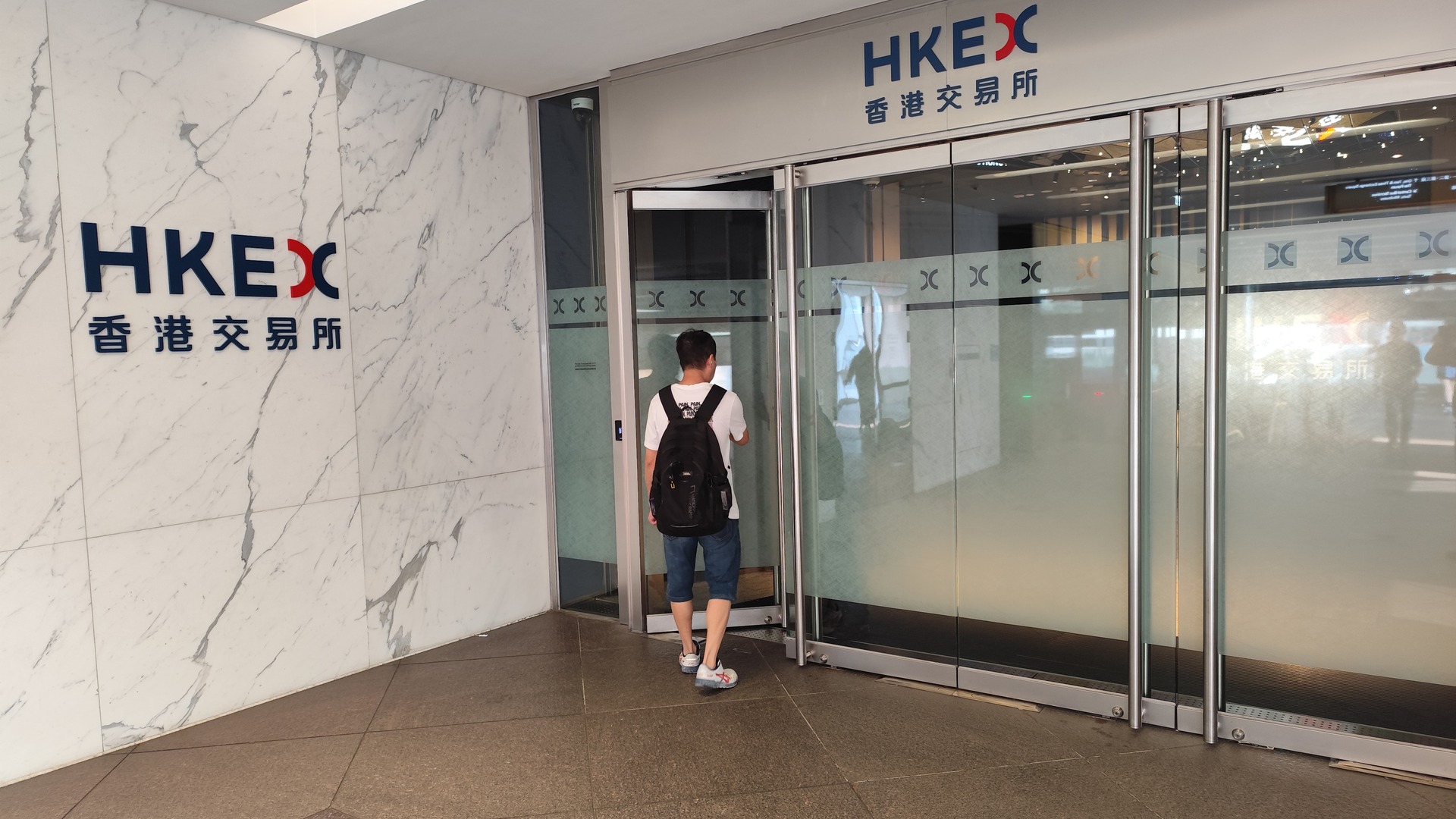
Photo: The Hong Kong Exchanges and Clearing entrance at Exchange Square, photographed in September 2026. YaEeBondZ 002 / Wikimedia Commons | https://commons.wikimedia.org/w/index.php?curid=199869612 | CC0 1.0 | https://creativecommons.org/publicdomain/zero/1.0/ | Cropped and resized.
Sources:
https://www.hsi.com.hk/content/dam/wpb/hsil/en_hk/press_releases/content/20261120T174500.pdf
https://www1.hkexnews.hk/listedco/listconews/sehk/2026/1113/2026111300577.pdfSources
- https://www.hsi.com.hk/content/dam/wpb/hsil/en_hk/press_releases/content/20261120T174500.pdf
- https://www1.hkexnews.hk/listedco/listconews/sehk/2026/1113/2026111300577.pdf
-
Mr. P Mindset Editorial Team
Taiwan’s benchmark TAIEX fell below 37,000 in the first minutes of trading Friday, extending Thursday’s selloff as tighter short-selling rules took effect. The cash index was at 36,888.17 at 9:05 a.m. in Taipei, down 1,538.72 points, or 4.00%, according to market data published by Anue.
The benchmark opened at 37,646.13, down 780.76 points, according to Economic Daily News. That put its opening loss at about 2.03%. The drop nearly doubled within five minutes. Formosa Television also reported that the index slipped below 37,000 early in the session. These were intraday readings, not closing figures. The Taiwan Stock Exchange recorded Thursday’s close at 38,426.89, down 1,768.02 points from Wednesday.
Friday was the first trading session under the tighter measures announced Thursday by Taiwan’s Financial Supervisory Commission. If a covered stock or Taiwan depositary receipt closes down at least 3.5%, specified short sales generally cannot be entered below that closing price during the next session. Another qualifying drop extends the restriction. The measure sets a price floor for covered short sales; it does not ban them altogether.
The commission also cut the daily cap on intraday sell orders using borrowed shares to 1% of a security’s average daily trading volume over the previous 30 trading days, from 3%. Both measures provide specified exemptions for activities such as market making and hedging. The new rules applied as Friday’s market opened; the early index readings do not establish what effect the curbs had.
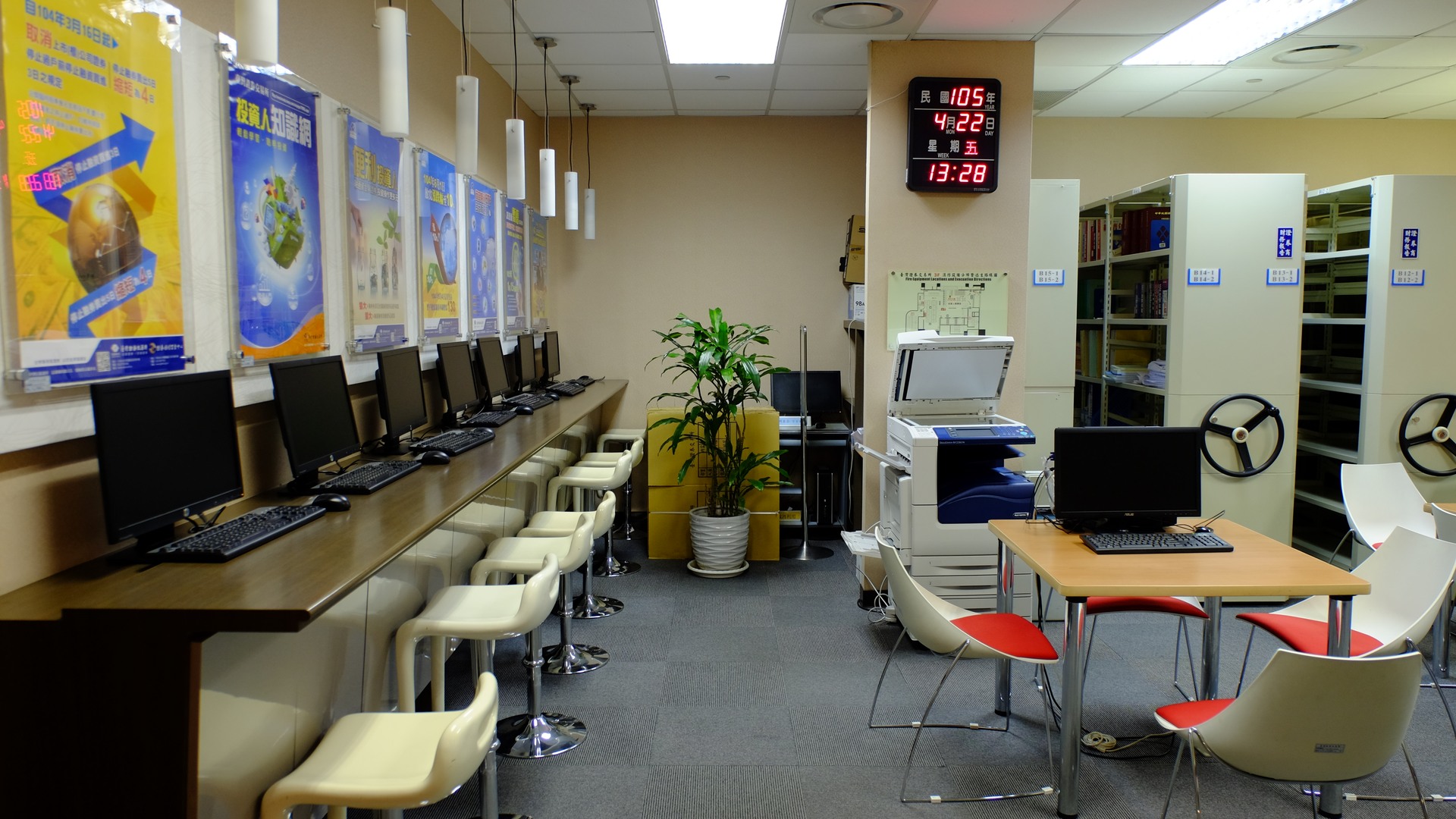
Photo: The Taiwan Stock Exchange’s investors’ reference room in Taipei 101, photographed in April 2016. 玄史生 / Wikimedia Commons | https://commons.wikimedia.org/wiki/File:Taiwan_Stock_Exchange_Investors_Reference_Room_in_3rd_Floor,_Taipei_101_20160422.jpg | CC0 1.0 | https://creativecommons.org/publicdomain/zero/1.0/ | Cropped and resized.
Sources:
https://news.cnyes.com/news/id/6668287
https://money.udn.com/money/story/5612/9890547?from=edn_newest_index
https://www.ftvnews.com.tw/news/detail/2026B20W0146
https://www.twse.com.tw/en/indicesReport/MI_5MINS_HIST?date=202610&response=html
https://www.fsc.gov.tw/ch/home.jsp?dataserno=202611190001&dtable=News&id=96&mcustomize=news_view.jsp&parentpath=0
https://focustaiwan.tw/business/202611190022Sources
- https://news.cnyes.com/news/id/6668287
- https://money.udn.com/money/story/5612/9890547?from=edn_newest_index
- https://www.ftvnews.com.tw/news/detail/2026B20W0146
- https://www.twse.com.tw/en/indicesReport/MI_5MINS_HIST?date=202610&response=html
- https://www.fsc.gov.tw/ch/home.jsp?dataserno=202611190001&dtable=News&id=96&mcustomize=news_view.jsp&parentpath=0
- https://focustaiwan.tw/business/202611190022
-

Mr. P Mindset Editorial Team
South Korea’s benchmark KOSPI opened 4.08% lower Friday, dropping back through 5,000 as two of the country’s largest chipmakers fell sharply. The index began trading at 4,928.51 at 9 a.m. in Seoul, down 209.38 points from Thursday’s close, according to Korea Exchange figures reported by JoongAng Ilbo.
The opening drop erased Thursday’s 1.39% gain. The index recovered some ground in the first few minutes but remained below 5,000. At 9:10 a.m., it was at 4,953.67, down about 3.6% from the previous close, according to Kyunghyang Shinmun. Those are snapshots from early Friday trading, not the closing level.
Samsung Electronics and SK hynix were among the biggest names under pressure. Aju Press reported early declines of roughly 4.7% for Samsung and 6.3% for SK hynix. The weakness was not confined to the main board. The separately tracked KOSDAQ opened 3.48% lower at 660.98, according to Yonhap.
Seoul’s losses followed a rough session in New York. The Nasdaq Composite finished Thursday down 2.25%, and the S&P 500 and the Dow Jones Industrial Average each fell more than 2%. Those were U.S. closing figures, recorded before South Korea opened Friday. The sequence shows the weakness in technology shares on both sides of the Pacific, but it does not establish a single cause for the Korean market’s decline.
Friday’s opening also marked a notable contrast with Thursday. The KOSPI had briefly dropped below 5,000 that day before recovering to close at 5,137.89.
Photo: The Yeouido financial district in Seoul, seen across the Han River in a March 2024 file photograph. S h y numis / Wikimedia Commons | https://commons.wikimedia.org/wiki/File:Skyline_of_Yeouido,_a_prominent_finance_district_in_Seoul.jpg | CC BY 4.0 | https://creativecommons.org/licenses/by/4.0/ | Cropped and resized.
Sources:
https://www.joongang.co.kr/article/25480396
https://www.yna.co.kr/view/AKR20261120037000008?section=economy%2Fall
https://www.ajupress.com/view/20261120090554986
https://www.khan.co.kr/article/202611200911001/
https://markets.ft.markitdigital.com/data/indices/tearsheet/historical?s=KSPI%3AKSCSources
- https://www.joongang.co.kr/article/25480396
- https://www.yna.co.kr/view/AKR20261120037000008?section=economyall
- https://www.ajupress.com/view/20261120090554986
- https://www.khan.co.kr/article/202611200911001/
- https://markets.ft.markitdigital.com/data/indices/tearsheet/historical?s=KSPIKSC
-
Mr. P Mindset Editorial Team
Japan’s Nikkei 225 fell about 3% in the first 20 minutes of trading Friday, reversing Thursday’s gain after a sharp selloff on Wall Street. The Tokyo benchmark was at 57,631.04 at 9:20 a.m. local time, down 1,813.17 points from Thursday’s close, according to an early reading from index provider Nikkei. That was an intraday reading, not the closing level.
The index opened at 58,551.56, already roughly 1.5% below its previous close of 59,444.21. Sellers pushed it lower after the opening bell. Thursday’s 419.93-point rise had taken place before the U.S. market completed its late-day reversal.
In New York, the Nasdaq Composite ended Thursday down 2.3%, while the S&P 500 lost 2.0% and the Dow Jones Industrial Average fell about 1,100 points. Those were U.S. closing figures. Tokyo’s Friday session was still in its first half hour when the Nikkei recorded its roughly 3% decline.
Investors also received new Japanese inflation data just before the opening bell. October consumer prices excluding fresh food rose 2.2% from a year earlier, compared with 2.1% in September. The figure fell a tenth of a percentage point short of the 2.3% forecast in a Quick survey cited by The Wall Street Journal. The report showed a modest pickup in inflation, but the timing alone does not show that it drove the selloff.
The Nikkei is a price-weighted benchmark of 225 stocks, so its move does not mean every Japanese stock fell by the same amount.
Photo: A sign outside the Tokyo Stock Exchange in an August 2008 file photograph. googolnobunaga / Wikimedia Commons | https://commons.wikimedia.org/wiki/File:%E6%9D%B1%E4%BA%AC%E8%A8%BC%E5%88%B8%E5%8F%96%E5%BC%95%E6%89%80-Tokyo_Stock_Exchange_-_panoramio.jpg | CC BY-SA 3.0 | https://creativecommons.org/licenses/by-sa/3.0/ | Cropped and resized; the edited photo remains under the same license.
Sources:
https://indexes.nikkei.co.jp/en/nkave/index/profile?idx=nk225
https://indexes.nikkei.co.jp/nkave/archives/summary?dt=20261119&idx=nk225
https://finance.yahoo.co.jp/quote/998407.O
https://apnews.com/article/2f178054aea79d282e5ccf8d62f26a28
https://www.wsj.com/economy/japan-consumer-inflation-accelerates-amid-rate-hike-views-15cf7577Sources
- https://indexes.nikkei.co.jp/en/nkave/index/profile?idx=nk225
- https://indexes.nikkei.co.jp/nkave/archives/summary?dt=20261119&idx=nk225
- https://finance.yahoo.co.jp/quote/998407.O
- https://apnews.com/article/2f178054aea79d282e5ccf8d62f26a28
- https://www.wsj.com/economy/japan-consumer-inflation-accelerates-amid-rate-hike-views-15cf7577
-
Mr. P Mindset Editorial Team
Ross Stores shares fell in after-hours trading Thursday after the discount retailer’s holiday-quarter profit forecast came in below Wall Street’s expectations. That reaction came despite a stronger third quarter and a higher full-year earnings forecast. The stock had already closed the regular session down 3.4% at $219.88.
Ross expects earnings of $2.16 to $2.25 a share for its fiscal fourth quarter, below the $2.27 consensus estimate cited by Barron’s. The company kept its forecast for comparable-store sales growth at 4% to 5%. That would still be an increase on top of a 9% gain in the same quarter last year.
Traffic helped carry the quarter ended Oct. 31. Sales rose about 12% to $6.26 billion, and comparable-store sales increased 8%. Ross credited that comparable-sales gain mainly to more shoppers visiting stores. Diluted earnings reached $1.91 a share, up from $1.58 a year earlier. The chain also opened 51 stores during the quarter across Ross Dress for Less and dd’s Discounts.
Ross raised its full-year profit forecast to $8.75 to $8.84 a share. That estimate includes about 60 cents a share in tariff refunds recorded in the second quarter, not a benefit Ross expects to book during the holidays.
The difference between the two forecasts explains why a higher annual estimate can coexist with disappointment about the quarter ahead. Sales grew briskly in the fall; the next test is how much of that momentum Ross carries through the holiday shopping season.
Photo: A Ross Dress for Less store in Onalaska, Wisconsin, in a December 2023 file photo. Wikideas1 / Wikimedia Commons | https://commons.wikimedia.org/wiki/File:Ross_Dress_For_Less_store.jpg | CC0 1.0 | https://creativecommons.org/publicdomain/zero/1.0/ | Cropped and resized.
Sources:
https://www.prnewswire.com/news-releases/ross-stores-reports-strong-third-quarter-sales-and-earnings-results-302946112.html
https://www.barrons.com/articles/ross-stores-earnings-stock-price-6d303547
https://www.marketwatch.com/data-news/ross-stores-inc-stock-outperforms-competitors-despite-losses-on-the-day-a6049e4f-9bae74d04859Sources
- https://www.prnewswire.com/news-releases/ross-stores-reports-strong-third-quarter-sales-and-earnings-results-302946112.html
- https://www.barrons.com/articles/ross-stores-earnings-stock-price-6d303547
- https://www.marketwatch.com/data-news/ross-stores-inc-stock-outperforms-competitors-despite-losses-on-the-day-a6049e4f-9bae74d04859
-
Mr. P Mindset Editorial Team
Intuit agreed Thursday to sell its Mailchimp email marketing business to Bending Spoons in a deal worth about $3.68 billion. The agreement would unwind Intuit’s 2021 acquisition of the service, which the TurboTax and QuickBooks maker bought for $12 billion in cash and shares.
Intuit described its expected consideration as $3.31 billion in cash and $368 million in Bending Spoons stock. The companies expect to close the sale in early 2027, subject to regulatory approvals and other conditions. Intuit said it plans to use the cash proceeds to buy back its own shares after closing, during its 2027 fiscal year.
The agreement came with Intuit’s results for the quarter ended Oct. 31. Revenue rose 12% from a year earlier to $4.4 billion, and diluted earnings rose to $2.59 a share under generally accepted accounting principles. QuickBooks Online Accounting revenue grew 19% to $1.4 billion. Mailchimp moved the other way: its sales slipped 1% to $313 million.
The two purchase prices show how far the proposed sale price is below the amount Intuit paid five years ago. They are not, by themselves, a measure of Intuit’s accounting loss on the transaction. The two deals have different structures, and the proceeds from the proposed sale include a stake in the buyer.
For now, Mailchimp is still part of Intuit. The company said its latest quarterly and full-year forecasts do not account for the pending sale and that it will update its outlook at closing.
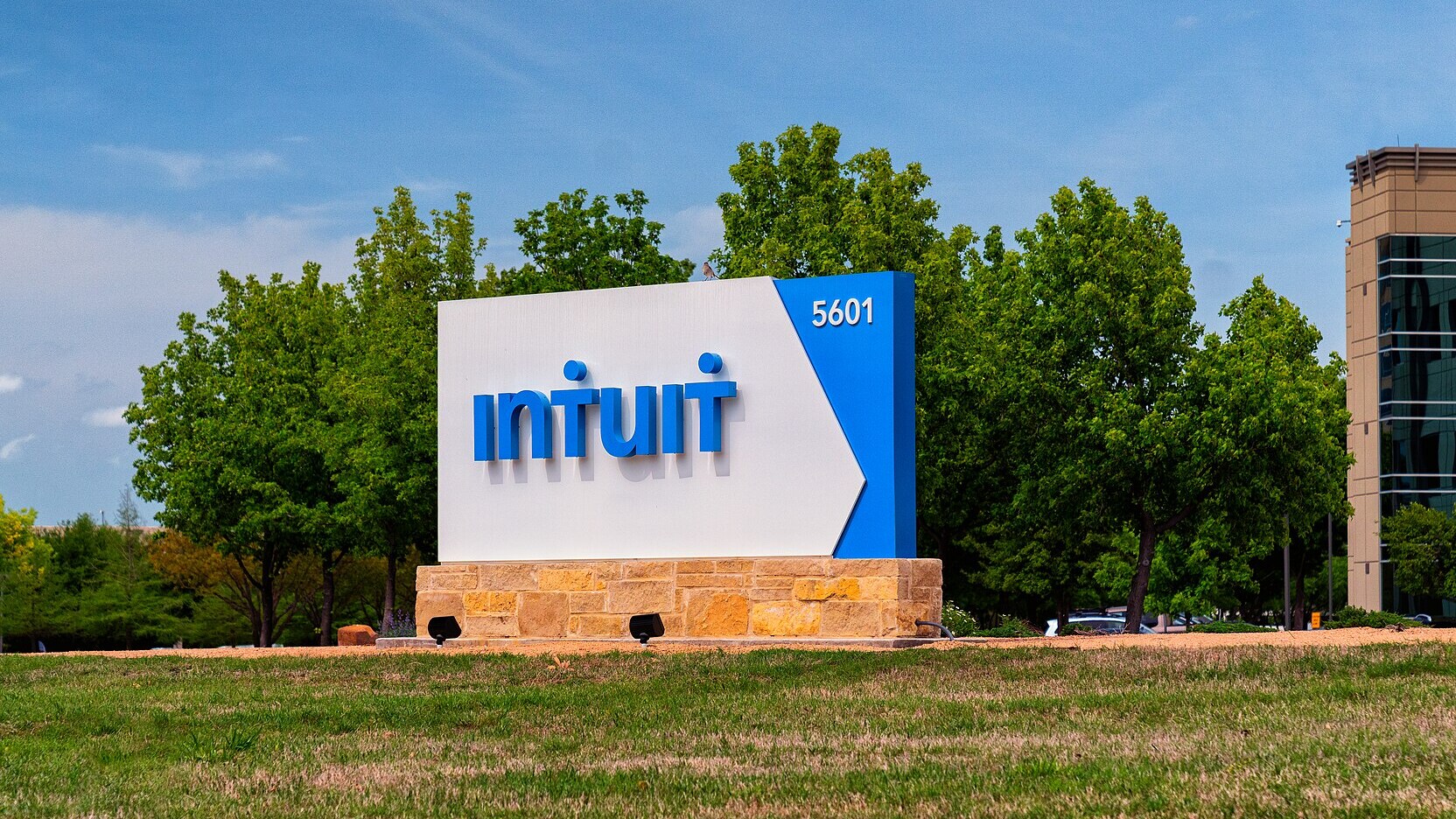
Photo: An Intuit sign outside the company’s Plano, Texas, office in an April 2019 file photo. Tony Webster / Wikimedia Commons | https://commons.wikimedia.org/wiki/File:Intuit_Software_Headquarters.jpg | CC BY 2.0 | https://creativecommons.org/licenses/by/2.0/ | Cropped and resized.
Sources:
https://investors.intuit.com/_assets/_53abfe4db2892907ae9461888a527033/intuit/news/2026-11-19_Intuit_Reports_First_Quarter_Results_and_Enters_1331.pdf
https://www.quantisnow.com/insight/bending-spoons-has-entered-into-a-definitive-agreement-to-acquire-6800461
https://www.sec.gov/Archives/edgar/data/896878/000089687824000039/intu-20240731.htmSources
- https://investors.intuit.com/_assets/_53abfe4db2892907ae9461888a527033/intuit/news/2026-11-19_Intuit_Reports_First_Quarter_Results_and_Enters_1331.pdf
- https://www.quantisnow.com/insight/bending-spoons-has-entered-into-a-definitive-agreement-to-acquire-6800461
- https://www.sec.gov/Archives/edgar/data/896878/000089687824000039/intu-20240731.htm
-
Mr. P Mindset Editorial Team
The S&P 500 was up as much as 1.3% on Thursday morning. By 1:43 p.m. Eastern, it was down 1.2%. That was a swing of about 2.5 percentage points from its morning high, measured against Wednesday’s close. The Dow Jones Industrial Average was about 755 points lower, a loss of 1.5%, and the Nasdaq Composite had fallen 1.3%, according to the Associated Press. None of those figures was a closing reading.
The selling reached well beyond a few large technology stocks. The AP reported that roughly 85% of the companies in the S&P 500 were down. That count adds something the index level alone can’t tell readers: the decline was spread across much of the market rather than concentrated in a handful of the largest companies.
Anthropic was an exception to the broad decline. Shares opened at $111.50 on Nasdaq, about 34% above the $83 offering price, according to the Guardian’s market coverage. They subsequently gave back some of that gain. The first trade showed what buyers paid to get into that stock when it opened. It did not show renewed demand for the market as a whole.
Thursday also brought a softer reading from the Philadelphia Fed’s regional factory survey. Its activity gauge fell to 6.3 in November from 20.9 in October, remaining above zero. The factory data and the IPO were both in view on Thursday, but neither, by itself, establishes what drove the index reversal.
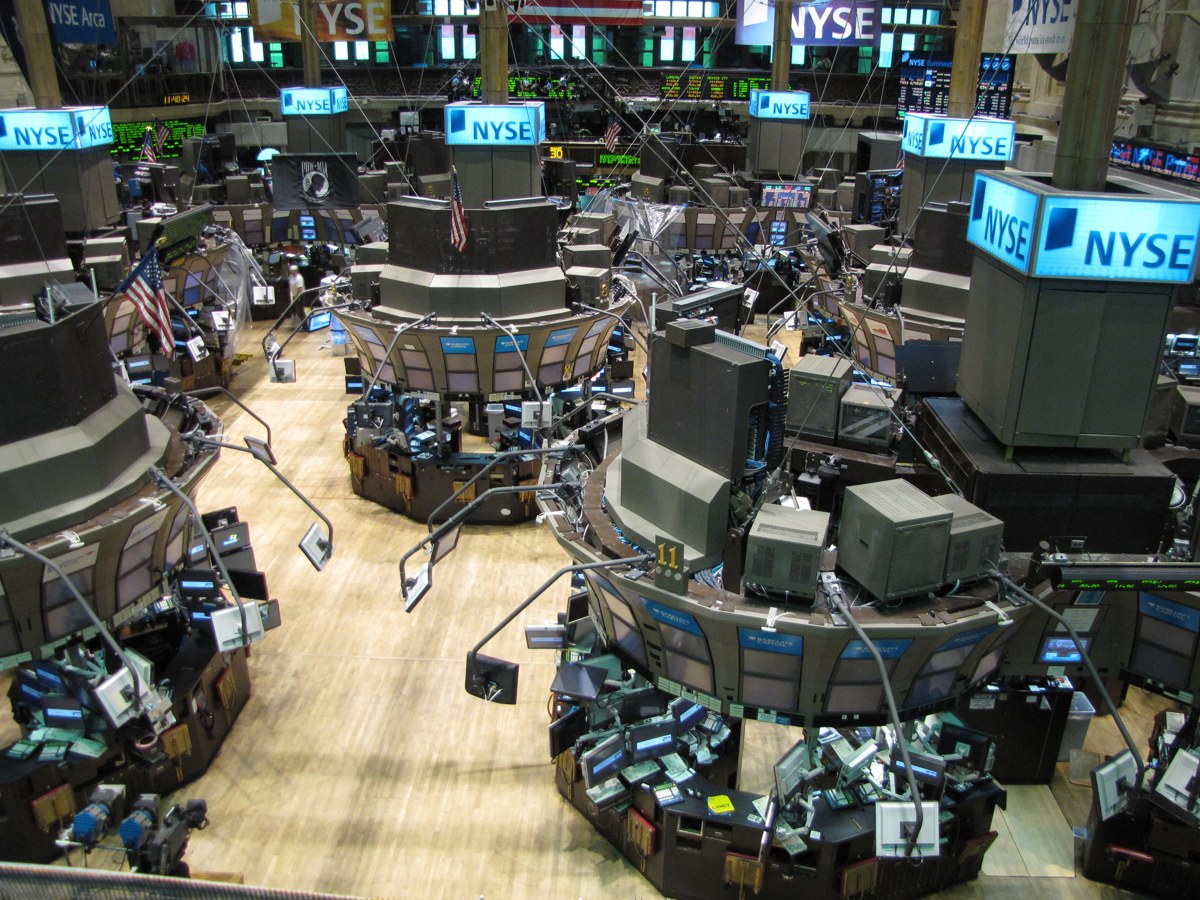
Photo: The New York Stock Exchange trading floor in August 2009. Archival photo for market context, not a view of Thursday’s session. Kevin Hutchinson / Wikimedia Commons | https://commons.wikimedia.org/wiki/File:NYSE.jpg | CC BY 2.0 | https://creativecommons.org/licenses/by/2.0/ | Resized without cropping.
Sources:
https://apnews.com/article/stocks-markets-ai-us-anthropic-206c84045137824feabe052a29ff6140
https://www.theguardian.com/business/live/2026/nov/19/anthropic-float-stock-market-nasdaq-raises-81bn-record-ipo-latest-news-updates
https://www.philadelphiafed.org/surveys-and-data/regional-economic-analysis/mbos-2026-11Sources
- https://apnews.com/article/stocks-markets-ai-us-anthropic-206c84045137824feabe052a29ff6140
- https://www.theguardian.com/business/live/2026/nov/19/anthropic-float-stock-market-nasdaq-raises-81bn-record-ipo-latest-news-updates
- https://www.philadelphiafed.org/surveys-and-data/regional-economic-analysis/mbos-2026-11
-

Mr. P Mindset Editorial Team
The retailer raised its full-year sales and earnings outlook as store-based pickup and delivery powered another quarter of digital growth.
Walmart’s biggest advantage online may be a building shoppers already know. The retailer said Thursday that pickup and delivery orders filled from stores led its global e-commerce growth in the fiscal third quarter. Online sales rose 17% worldwide and 23% at Walmart U.S.
The quarterly report showed $188.8 billion in revenue, up 5.2% from a year earlier. Walmart U.S. comparable sales grew 2.9% excluding fuel, down from 4.5% growth a year earlier. Walmart’s comparable-sales measure includes online orders, so the online growth rate isn’t an extra gain to add on top. It shows how much faster one channel is growing than the broader U.S. business.
Walmart is also trying to get more out of its relationships with frequent shoppers. Global membership-fee revenue rose 17%. The company introduced a $120 annual bundle that combines Walmart+ and Sam’s Club Plus, and said global advertising grew 25%. That advertising figure measures more than one kind of payment: Walmart records some of it as sales and some as a reduction in the cost of goods sold.
Management now expects full-year net sales to rise 4.9% to 5.2% after stripping out currency movements, compared with its August range of 4.0% to 5.0%. It lifted its adjusted earnings forecast to $2.84 to $2.89 a share from $2.80 to $2.87.
The holiday quarter will offer another test of the strategy. Stores let the retailer serve online customers without a separate building for every order. But the sales figures alone don’t show how much Walmart keeps after workers pick the merchandise and someone drives it to a customer’s door.
Photo: The Walmart name and spark logo on a store facade in a company archive photograph. Resized. Walmart Corporate / Wikimedia Commons | https://commons.wikimedia.org/wiki/File:Walmart_store_exterior_5266815680.jpg | CC BY 2.0 | https://creativecommons.org/licenses/by/2.0/ | Resized to fit.
Sources:
https://stock.walmart.com/_assets/_584724612834b84e661f0caf26ece998/walmart/db/938/10001/earnings_release/Earnings_Release_%28FY27_Q3%29.pdfSources
November 19, 2026 -

Mr. P Mindset Editorial Team
Prescriptions helped lift sales at existing drugstores while a C$401 million gain from a banking sale inflated reported profit.
Loblaw sold more through its pharmacies and grocery stores last quarter, but the pharmacy counters had the stronger showing. On Thursday, the Canadian retailer reported that same-store sales at its drugstore business rose 4.8% year over year, compared with 0.6% at its food business.
That gap was wider inside the pharmacies. Sales from pharmacy and healthcare services at comparable locations rose 7.6%, while the part of the store that sells products such as cosmetics and over-the-counter medicines grew 1.6%. Loblaw pointed to specialty and chronic prescriptions as contributors. Grocery sales across all locations grew 2.8%, helped by new stores, which explains why total food sales climbed faster than sales at comparable locations.
Across the retail business, sales rose 3.6% to C$19.86 billion in the 16 weeks ended Oct. 10. Retail operating income climbed 9.7% to C$1.41 billion. Those figures show how the stores performed separately from a deal that made the company-wide profit number considerably larger.
Loblaw recorded a C$401 million after-tax gain from the sale of PC Financial to EQB. That gain was about one-third of the C$1.19 billion in reported net earnings attributable to Loblaw shareholders. Earnings from continuing operations attributable to those shareholders were C$792 million, up from C$746 million a year earlier. The quarter also picked up only one month of EQB earnings due to the deal timing and differences in reporting periods.
The next quarter won’t repeat the PC Financial sale. For investors following Loblaw’s Toronto-listed shares, pharmacy and food same-store sales offer a clearer way to see whether the gap between the two businesses persists.
Photo: A Loblaws grocery store in Richmond Hill, Ontario, photographed in February 2020. Archive photograph; resized. Raysonho @ Open Grid Scheduler / Scalable Grid Engine / Wikimedia Commons | https://commons.wikimedia.org/wiki/File:LoblawsYongeAndBernard2.jpg | CC0 1.0 | https://creativecommons.org/publicdomain/zero/1.0/ | Resized to fit.
Sources:
https://www.globenewswire.com/news-release/2026/11/19/3406399/0/en/loblaw-reports-third-quarter-retail-sales-growth-of-3-6-and-adjusted-diluted-net-earnings-per-common-share-growth-of-8-8.htmlSources
November 19, 2026 -

Mr. P Mindset Editorial Team
The government contractor disclosed a $660 million base purchase price for Agile Defense. Its new outlook includes about ten months of the acquired business.
Maximus has expanded its federal defense and intelligence contracting business. The Virginia-based company completed its purchase of Agile Defense on Wednesday and disclosed the closing in Thursday’s results. Agile brings cybersecurity, software and cloud work for defense, intelligence and civilian agencies.
A separate securities filing spells out the cost. The base price was $660 million, subject to adjustments. The seller can receive up to another $50 million if the acquired business meets revenue targets in the year after closing. Maximus added $295 million in term loans to help finance the purchase and provide general liquidity.
In its results release, Maximus estimated that net debt relative to earnings under its credit agreement would be about 2.3 times after the deal, up from 1.8 at Sept. 30. That is still within management’s stated range of two to three times, but leaves the company carrying more debt against each dollar of earnings by that measure.
Maximus posted $5.23 billion in fiscal 2026 revenue, down from $5.43 billion a year earlier. Its new forecast calls for $5.45 billion to $5.65 billion in fiscal 2027, including roughly ten months of Agile Defense revenue. Yet it forecasts $7.50 to $8.00 in adjusted earnings per share, below the $8.24 just reported. One reason is the expected absence of incentives tied to a Department of Veterans Affairs medical examination program that added an estimated $1.05 to last year’s adjusted earnings per share.
The two forecasts make an important distinction: Maximus can report more revenue after the acquisition without reporting higher adjusted earnings per share. Its next results will start showing how much the new business contributes and whether the combined company can turn that additional revenue into earnings.
Photo: The Pentagon in a September 2003 aerial photograph. It appears here as context for U.S. defense contracting, not as a depiction of the Maximus deal. Resized. Tech. Sgt. Andy Dunaway / U.S. Department of Defense via Wikimedia Commons | https://commons.wikimedia.org/wiki/File:US_Navy_030926-F-2828D-089_Aerial_view_of_the_Pentagon.jpg | U.S. public domain | https://creativecommons.org/publicdomain/mark/1.0/ | Resized to fit.
Sources:
https://www.sec.gov/Archives/edgar/data/1032220/000103222026000052/mms-20261118.htm
https://investor.maximus.com/news-events/press-releases/detail/592/maximus-reports-fourth-quarter-and-full-year-results-forSources
- https://www.sec.gov/Archives/edgar/data/1032220/000103222026000052/mms-20261118.htm
- https://investor.maximus.com/news-events/press-releases/detail/592/maximus-reports-fourth-quarter-and-full-year-results-for
