
-
Mr. P Mindset Editorial Team
The final regulations explain default contributions in covered 401(k) and 403(b) plans. Employees can still opt out or change their rate.
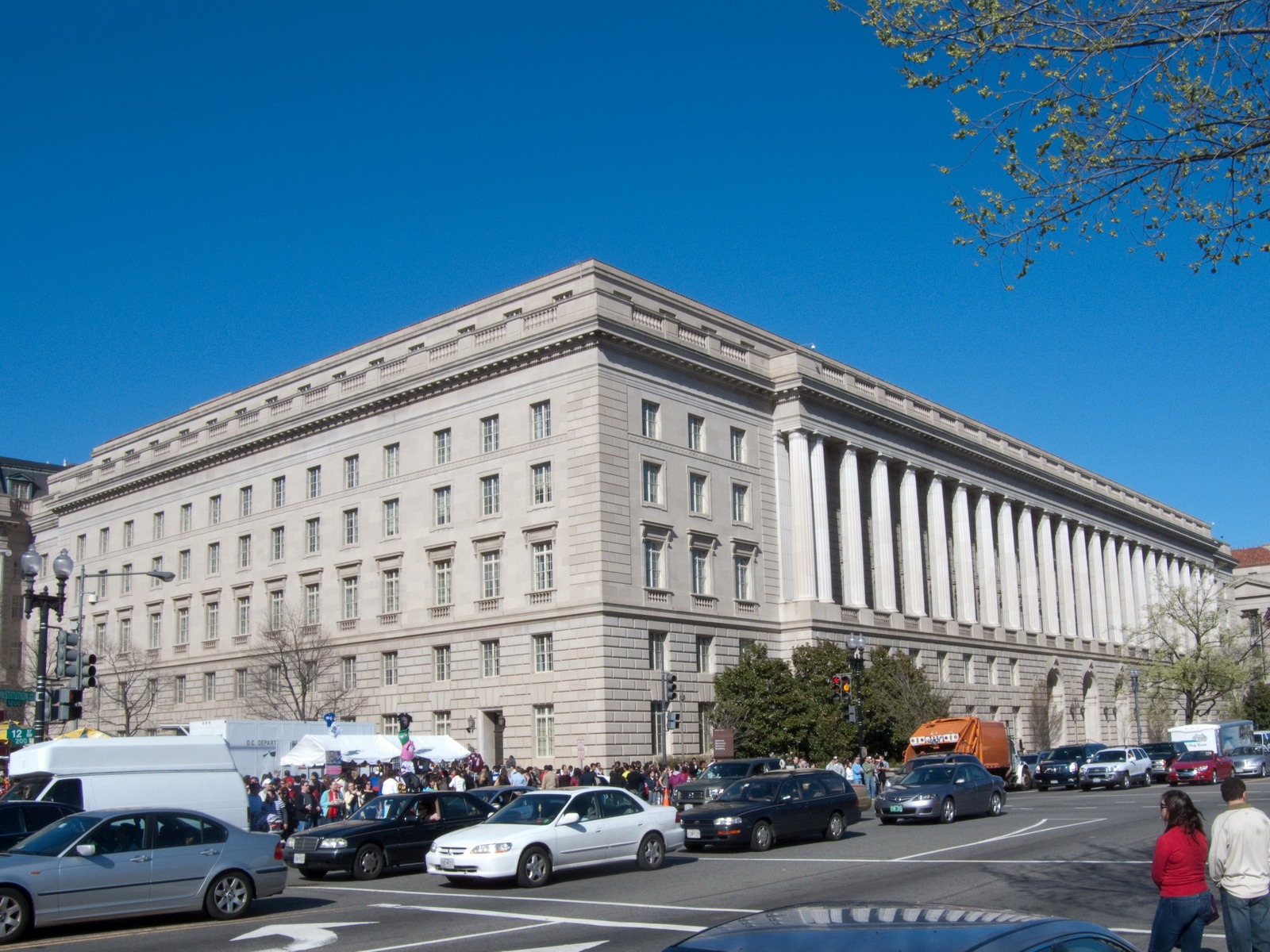
Treasury and the IRS issued final regulations on automatic retirement-plan enrollment on Nov. 17. The regulations explain how employers should implement a provision of the SECURE 2.0 Act for certain 401(k) and 403(b) plans, including how to set default contributions and notify workers.
Covered plans generally must enroll eligible employees automatically at an initial contribution rate of 3%. After an initial participation period, the rate generally increases by at least one percentage point a year until it reaches at least 10%, subject to a 15% maximum. Those percentages govern the default, not a mandatory contribution. Workers can opt out or choose a different rate.
The rules clarify exceptions for qualifying small and new businesses, government and church plans, and SIMPLE 401(k) plans. They also address what happens when plans merge and allow sponsors to combine some required notices. Those distinctions matter because the employer’s plan, not just a worker’s job title or start date, determines whether the rule applies.
The final regulations generally apply to plan years beginning after Dec. 31, 2027. That is the applicability date for these regulations, not the date Congress enacted the underlying automatic-enrollment provision. For a plan that follows the calendar year, the general start date for the final regulations is Jan. 1, 2028.
Sources
- https://www.irs.gov/newsroom/treasury-irs-issue-final-rules-to-help-hardworking-americans-build-a-financially-secure-retirement
- https://commons.wikimedia.org/wiki/File:IRS_Building_Constitution_Avenue.jpg
- https://creativecommons.org/licenses/by/2.0/
-

Mr. P Mindset Editorial Team
The latest BLS figures show a largely steady state-by-state labor market, with an important gap in unemployment comparisons.
California led four states with statistically significant payroll gains in October, while employment was essentially unchanged in the other 46 states and the District of Columbia, the Bureau of Labor Statistics reported Friday.
California added 47,100 jobs, followed by Indiana with 15,900, Kansas with 7,100 and Iowa with 7,000. Indiana and Kansas each recorded 0.5% increases, larger percentage gains than California’s 0.3%. The figures are seasonally adjusted and preliminary.
Unemployment rates fell in Florida, New Hampshire, Pennsylvania and the District of Columbia. Colorado was the only state with a statistically significant increase, rising 0.3 percentage point to 4.4%. The national rate was little changed at 4.1%.
An important comparison is missing: BLS did not publish its usual year-over-year unemployment analysis because October 2025 household survey data were not collected during a funding lapse. That limitation does not erase the separate annual payroll comparisons.
For readers, the distinction matters. Payroll statistics count jobs where establishments operate; unemployment measures describe residents and come from a different statistical program. An unchanged state estimate also does not mean every employer stopped hiring. These broad figures cannot establish whether a particular occupation, employer or local job market improved.
Sources
- https://www.bls.gov/news.release/archives/laus_11202026.htm
- https://commons.wikimedia.org/wiki/File:Caterpillar_303.5E_hydraulic_excavator_along_the_San_Tomas_Expressway_in_Santa_Clara,_California.jpg
- https://creativecommons.org/licenses/by-sa/3.0/
-

Mr. P Mindset Editorial Team
New annual BLS data show fewer reported nonfatal cases, but the improvement was uneven across industries.
Private employers reported 2.4 million nonfatal workplace injuries and illnesses in 2025, down 3.0% from the previous year, according to Bureau of Labor Statistics figures released November 18. It was the third consecutive annual decline and the lowest total in the series, which began in 2003.
The improvement was much sharper for illnesses than injuries. Reported illnesses fell 26.1% to 109,400, with respiratory illness cases dropping 67.6%. Injuries declined a more modest 1.5% to 2.3 million. Combining the two categories can therefore obscure how differently they moved.
The overall rate was 2.3 recordable cases per 100 full-time-equivalent workers. Employers reported 842,500 cases involving days away from work and another 558,300 involving job transfer or restricted duties.
Industry results varied. Manufacturing cases fell 8.5%, retail trade declined 5.9%, and healthcare and social assistance dropped 3.3%. Educational services moved in the opposite direction, with cases increasing 13.5% to 42,000.
These are annual, employer-reported nonfatal cases, not a real-time measure of November workplace conditions or a count of occupational deaths. For workers comparing opportunities, the national decline offers context rather than a safety guarantee. A lower overall total cannot establish that a particular employer, task or worksite has become safer.
Sources
- https://www.bls.gov/news.release/archives/osh_11182026.htm
- https://commons.wikimedia.org/wiki/File:Construction_Photography_of_Workers_on_Site_by_Construction_Photographer_Daniel_Mekis.jpg
- https://creativecommons.org/licenses/by/4.0/
-
Mr. P Mindset Editorial Team
ADP’s November sentiment measure rose for a third month, with differences across industries and company sizes.
Worker motivation and commitment strengthened for a third consecutive month in November, according to ADP Research’s latest employee sentiment report, published November 17. Its Employee Motivation and Commitment Index rose three points to 134.
The improvement reached 12 of the 19 industries tracked. Information recorded a 15-point gain to 132, while personal services climbed 13 points to 128. Construction increased eight points to 117. Real estate went the other way, falling seven points to 75, its lowest reading since July 2022.
Employer size also mattered. Six of seven size categories improved, but businesses with 50 or fewer employees were the exception: their index fell two points to 97. Organizations with 150 to 499 workers rose 11 points to 118, their largest increase since ADP began tracking size categories in March 2023.
All three worker groups improved. Skilled-task workers posted the largest increase, followed by repetitive-task and knowledge workers. The survey was conducted November 1 through 11.
The index measures employees’ attitudes, not payroll growth, vacancies or the likelihood of receiving a job offer. A stronger sentiment reading can coexist with uneven hiring conditions. Readers assessing the labor market should treat this as a separate perspective on workplace experience, not a replacement for employment statistics.
Sources
- https://www.adpresearch.com/research/employee-sentiment-2026-nov
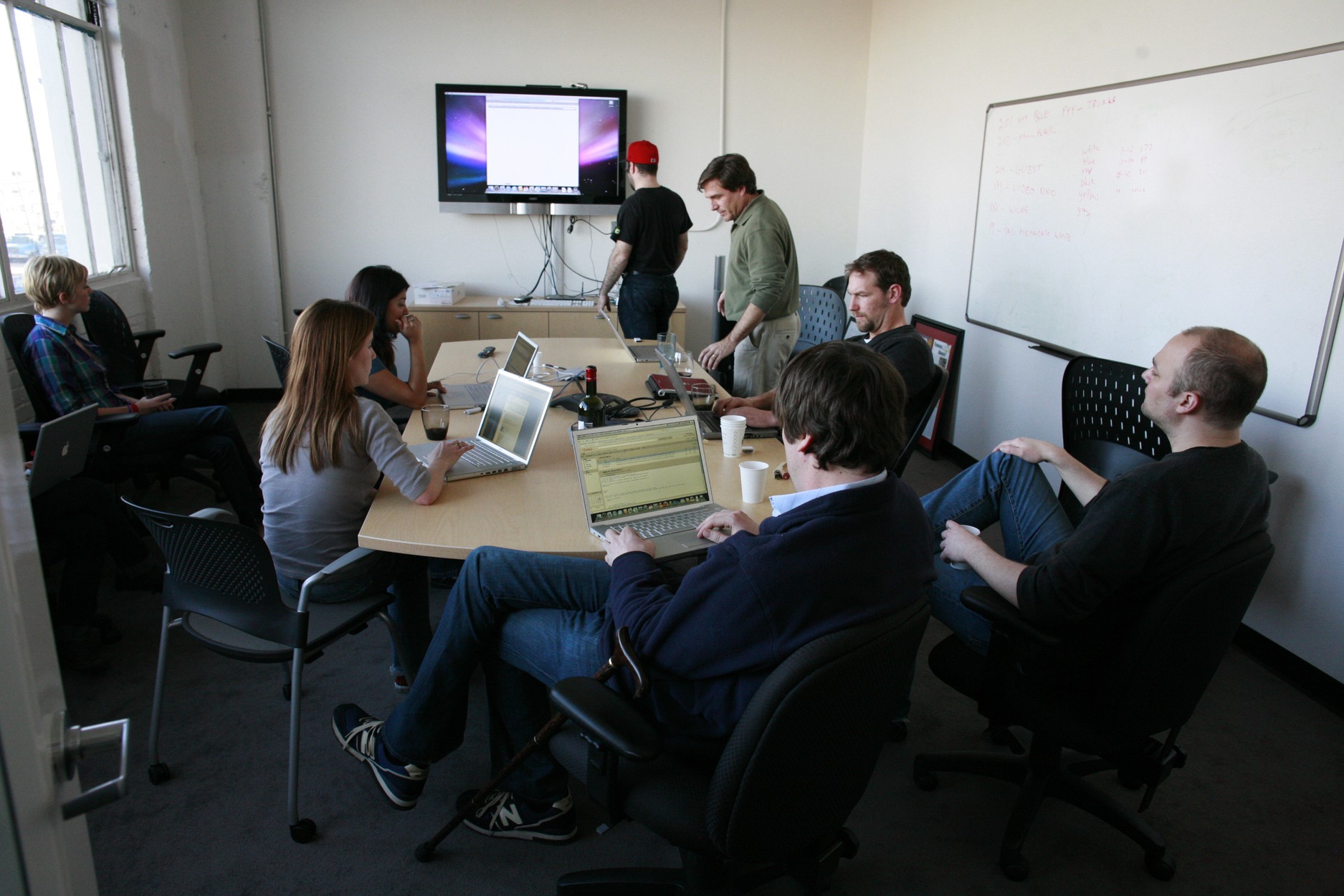
- https://commons.wikimedia.org/wiki/File:Staff_meeting.jpg
- https://creativecommons.org/licenses/by/2.0/
-
Mr. P Mindset Editorial Team
Anna Paulson argued that clearing up how the Fed reacts to new data can be more useful than spelling out the path for rates.
The Federal Reserve sets a rate for overnight lending, yet its words can reach a 30-year mortgage. Philadelphia Fed President Anna Paulson used that gap in a Nov. 19 speech to the Money Marketeers in New York to make a case for explaining what could change policy rather than telling markets exactly where rates are headed.
Mortgage rates and longer-term Treasury yields reflect, among other things, what investors expect short-term rates to do in the future. If investors understand what new evidence might persuade the Fed to move, they can adjust those expectations when the evidence arrives rather than waiting for another speech. That does not mean the Fed sets mortgage rates or can dictate how markets react.
Paulson pointed to the September rate increase and the decision to hold rates steady in October. She supported both. For her, the pause was about how quickly to move, not a change in direction. She said higher underlying inflation, mounting wage pressures or a rise in inflation expectations could make her want to move faster.
Paulson also said guidance about the future path of rates can be especially valuable when the Fed has little room to cut its policy rate further. Her remarks were an argument for when to use that tool, not a prediction of the December vote or a statement on behalf of the committee.
Sources
- https://www.philadelphiafed.org/the-economy/monetary-policy/261119-money-marketeers-speech
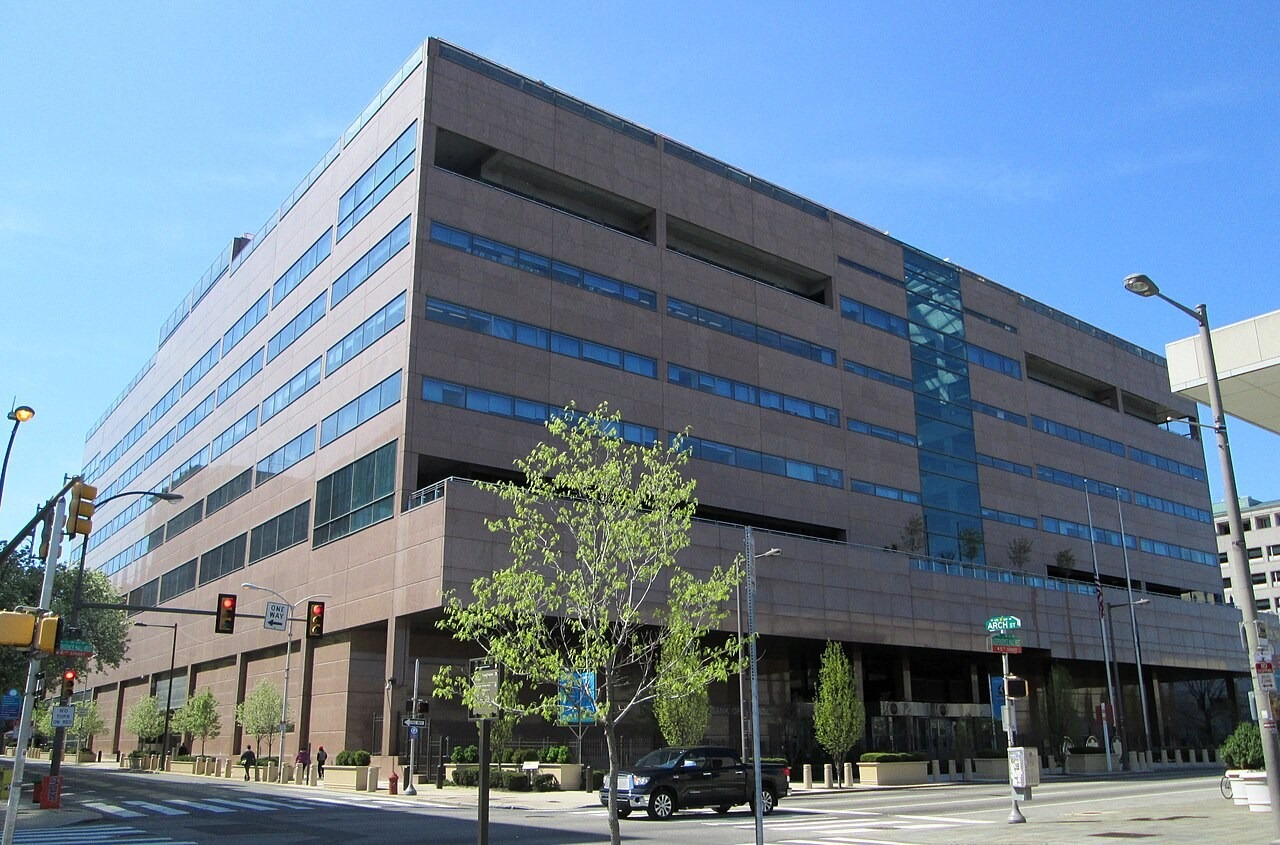
- https://commons.wikimedia.org/w/index.php?curid=26378274
- https://creativecommons.org/licenses/by-sa/4.0/
-

Mr. P Mindset Editorial Team
The Fed’s weekly balance sheet shows how changes in other accounts can leave banks with more reserves without a big increase in central-bank credit.
Banks held an average of nearly $2.98 trillion in reserve balances at the Federal Reserve in the week ended Nov. 18. That was $19.1 billion more than a week earlier, even though average Reserve Bank credit fell $1.8 billion, according to the Fed’s Nov. 19 balance-sheet report.
An important part of the explanation was on the other side of the ledger. The Fed reported a $21.1 billion decline in the combined factors that absorb reserves. Average reverse repurchase agreements, through which counterparties can temporarily place cash at the Fed against securities, fell $12.1 billion. Other deposits also moved lower, while the Treasury’s main account rose by $2.2 billion on average.
The Treasury account illustrates why the measurement period matters. Its Wednesday balance was down about $19.8 billion from the prior Wednesday, even as the weekly average increased. A one-day snapshot and a weekly average can both be accurate. Using one measure for each side of the comparison can give the wrong impression about where balances moved.
Reserves help banks settle payments, but the balance is not a count of what they lent to households and businesses. The report also did not announce a change in the policy rate. It offers a weekly look at how shifts in the Fed’s own accounts and its counterparties’ balances leave more or less money in banks’ reserve accounts.
Sources
- https://www.federalreserve.gov/releases/h41/20261119/
- https://commons.wikimedia.org/w/index.php?curid=151792297
- https://creativecommons.org/licenses/by/4.0/
-

Mr. P Mindset Editorial Team
Beth Hammack proposed a high bar for stepping in and a clear way to distinguish emergency bond purchases from monetary stimulus.
Cleveland Fed President Beth Hammack wants policymakers to decide how they would respond to a breakdown in Treasury trading before the next emergency. In Nov. 17 remarks at the Brookings Institution, she said intervention should be reserved for disruptions that go beyond what normal volatility would explain and threaten to spill into the wider economy.
Treasuries are used to set borrowing benchmarks and as collateral for short-term loans. If investors are forced to sell them quickly while dealers cannot absorb the volume, the strain can spread beyond the government bond market. But a wider gap between what buyers bid and sellers ask is common in turbulent markets. Hammack cited the April 2025 tariff-related selloff as an example of strain that, in her assessment, did not rise to the level requiring Fed intervention.
Her first option would be temporary lending against collateral, potentially through an expanded standing repurchase operation. If lending could not relieve forced selling, she said bond purchases might be warranted. She suggested the Fed could show such holdings separately on its balance sheet, making it easier to see whether they shrink once trading conditions recover.
The distinction is important: a transaction intended to restore orderly trading is not necessarily an attempt to lower borrowing costs across the economy. Hammack outlined her own proposals, not an intervention or rule adopted by the Fed.
Sources
- https://www.clevelandfed.org/collections/speeches/2026/sp-20261117-lessons-from-a-burning-river
- https://commons.wikimedia.org/w/index.php?curid=77954215
- https://creativecommons.org/publicdomain/zero/1.0/
-

Mr. P Mindset Editorial Team
Anthropic’s IPO grew by $12.2 billion at closing after its underwriters bought all 147 million extra shares available under their option. The additional shares were sold at the original $83 offer price, bringing the gross size of the public offering to about $93.5 billion, the company said Friday.
Anthropic received about $91.6 billion of those gross proceeds before underwriting costs and other expenses. The rest went to existing shareholders who sold shares as part of the offering. Every share purchased under the extra allotment came from Anthropic itself, so the $12.2 billion increase in gross proceeds went to the company, not to the selling shareholders. The final public sale covered 1.127 billion Class A shares, up from the 980 million in the base offering.
The AI developer also completed a separate $26 billion private placement at $83 per share, selling Class N stock to seven companies, including Google, Microsoft and Nvidia. Taken together, the IPO and private placement generated roughly $119.5 billion in gross proceeds, including the portion that went to selling shareholders.
The closing announcement settles how much was sold, not where the stock is trading. Anthropic Class A shares began trading Thursday on the Nasdaq Global Select Market under the ticker ANT. The $83 figure is the price paid in the offering and the private placement, not a floor for trades on Nasdaq.
Sources
- https://www.anthropic.com/news/ipo-close
- https://www.sec.gov/Archives/edgar/data/2130357/000162828026074937/anthropicpbc-fwppricing.htm
- https://commons.wikimedia.org/w/index.php?curid=110229084
- https://creativecommons.org/licenses/by/2.0/
-

Mr. P Mindset Editorial Team
Britain and the European Union are aiming to remove routine certificates and border checks for most covered food, animal and plant shipments starting March 1, 2028. Leaders announced the target Friday after talks in Brussels. They also said negotiations to link their carbon markets had wrapped up, with the two sides aiming to apply that agreement in 2028.
The food agreement would cover most eligible movements between the EU and Great Britain or the Crown Dependencies. The leaders said similar benefits would extend to shipments from Great Britain to Northern Ireland through the Windsor Framework. For businesses dealing in perishable goods, fewer certificates and inspections would reduce paperwork and the risk of delays. Friday’s statement does not change the rules at the border today.
The carbon agreement would create a basis for each side to recognize emissions allowances issued by the other. It could also clear a path to exemptions from each side’s carbon border charges once the relevant procedures are complete. The British government estimates the food agreement could add up to £5.1 billion a year to the UK economy and the carbon link up to £3.8 billion a year. Those are government projections, not savings businesses have already seen.
Both sides still have formal steps to complete. The leaders also set a six-month deadline to finish separate negotiations on university tuition fees for students crossing between the UK and the EU.
Sources
- https://www.gov.uk/government/publications/ukeu-summit-2026-key-documents/uk-eu-summit-2026-joint-statement-html
- https://www.gov.uk/government/news/uk-eu-summit-package-factsheet-and-mythbuster
- https://commons.wikimedia.org/w/index.php?curid=89619304
- https://creativecommons.org/licenses/by/2.0/
-
Mr. P Mindset Editorial Team
Germany’s DAX fell below 25,000 on Friday morning, then climbed back above the mark as Frankfurt stocks cut some of their losses. The benchmark was at 24,920.99 at 10:57 a.m. local time, down 542.82 points, or 2.13%, from Thursday’s close, according to the market-data service used by Raiffeisenbank-Volksbank Oder-Spree. By 11:56 a.m. it was back at 25,072.29, still down 1.54%. Both readings were from the cash session, not closing prices.
The decline followed five consecutive lower closes. On Thursday the index had finished at 25,463.81, already about 4.8% below the previous Friday’s close of 26,749.95. At the late-morning reading, the loss for the week was about 6.3%. The DAX had traded as high as 27,001.67 on November 12.
German chipmaker Infineon was among the early decliners, down 4.7% in a 9:11 a.m. Xetra reading reported by finanzen.net. Siemens Energy was down about 4% at that point. The losses were not confined to Frankfurt: Reuters reported that the pan-European STOXX 600 was down 1.5% in morning trading.
Investors also had fresh price data to digest. Germany’s statistics office said producer prices rose 8.1% in October from a year earlier, compared with 6.7% in September. Energy prices were up 18.7% year over year. The figures measure the prices producers receive, not what households pay, and do not by themselves explain the stock-market decline.
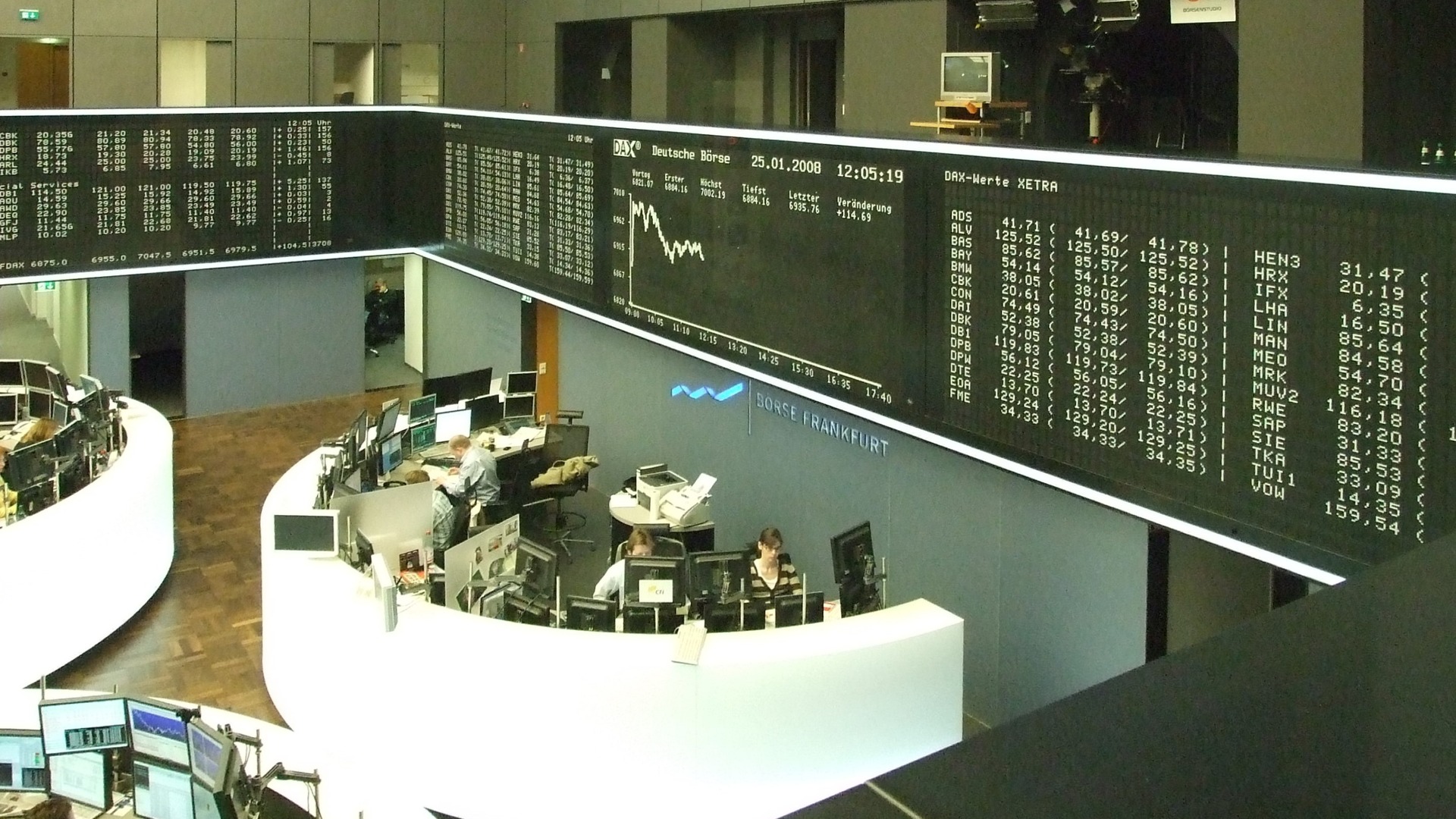
Photo: The trading floor of the Frankfurt Stock Exchange in an archival photograph from January 2008. Dontworry / Wikimedia Commons | https://commons.wikimedia.org/w/index.php?curid=3549689 | CC BY-SA 3.0 | https://creativecommons.org/licenses/by-sa/3.0/ | Cropped and resized; this version uses the same license.
Sources:
https://boerse.vr-profibroker.de/marktinfos/kurse_einzelkurs_news.htn?i=159096&id=50951211&navId=marktUebersicht&offset=0&rzbk=2788&rzid=XC&suche=1&u=8171928
https://www.investing.com/indices/germany-30-historical-data
https://www.marketscreener.com/news/stocks-slide-as-ai-selloff-deepens-asia-set-for-worst-week-since-2020-ce785ed3d98aff21
https://www.destatis.de/EN/Press/2026/11/PE26_407_61241.html
https://www.finanzen.net/nachricht/aktien/boerse-frankfurt-in-rot-dax-verbucht-zum-start-abschlaege-16077926Sources
- https://boerse.vr-profibroker.de/marktinfos/kurse_einzelkurs_news.htn?i=159096&id=50951211&navId=marktUebersicht&offset=0&rzbk=2788&rzid=XC&suche=1&u=8171928
- https://www.investing.com/indices/germany-30-historical-data
- https://www.marketscreener.com/news/stocks-slide-as-ai-selloff-deepens-asia-set-for-worst-week-since-2020-ce785ed3d98aff21
- https://www.destatis.de/EN/Press/2026/11/PE26_407_61241.html
- https://www.finanzen.net/nachricht/aktien/boerse-frankfurt-in-rot-dax-verbucht-zum-start-abschlaege-16077926
- https://commons.wikimedia.org/w/index.php?curid=3549689
- https://creativecommons.org/licenses/by-sa/3.0/


